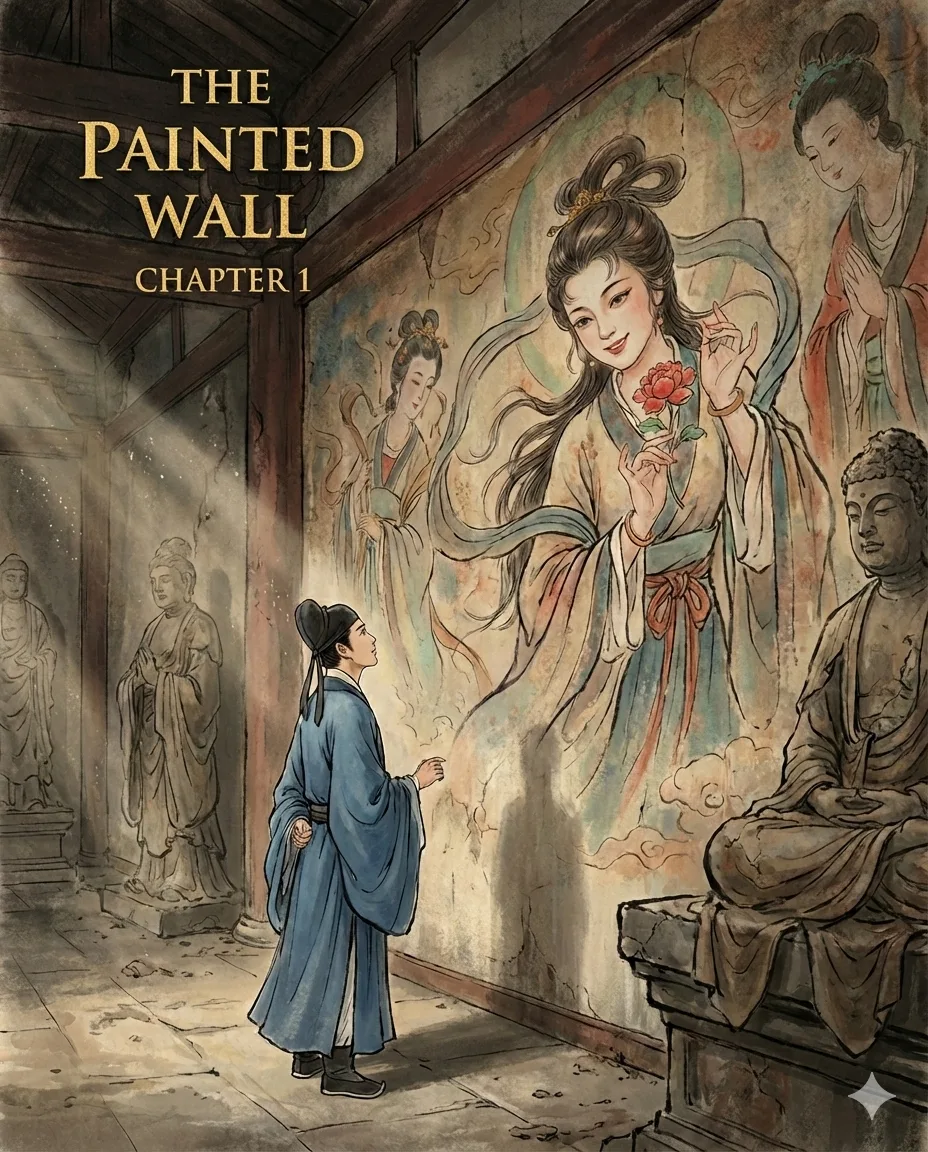
Chapter I · The Temple Mural
The Jiangxi scholar Meng Longtan travels in the capital with Zhu, a provincial graduate. By chance they wander into a small temple where a lone old monk lodges. He straightens his robes, greets them, and guides them through the halls.
In the main hall stands a statue of the eminent monk Baozhi. On both walls are exquisite murals so vivid the figures seem alive. On the eastern wall a host of flower-scattering celestial maidens drift across the scene; among them a loose-haired girl holds a blossom and smiles, her cherry lips poised to speak, her eyes rippling with feeling.
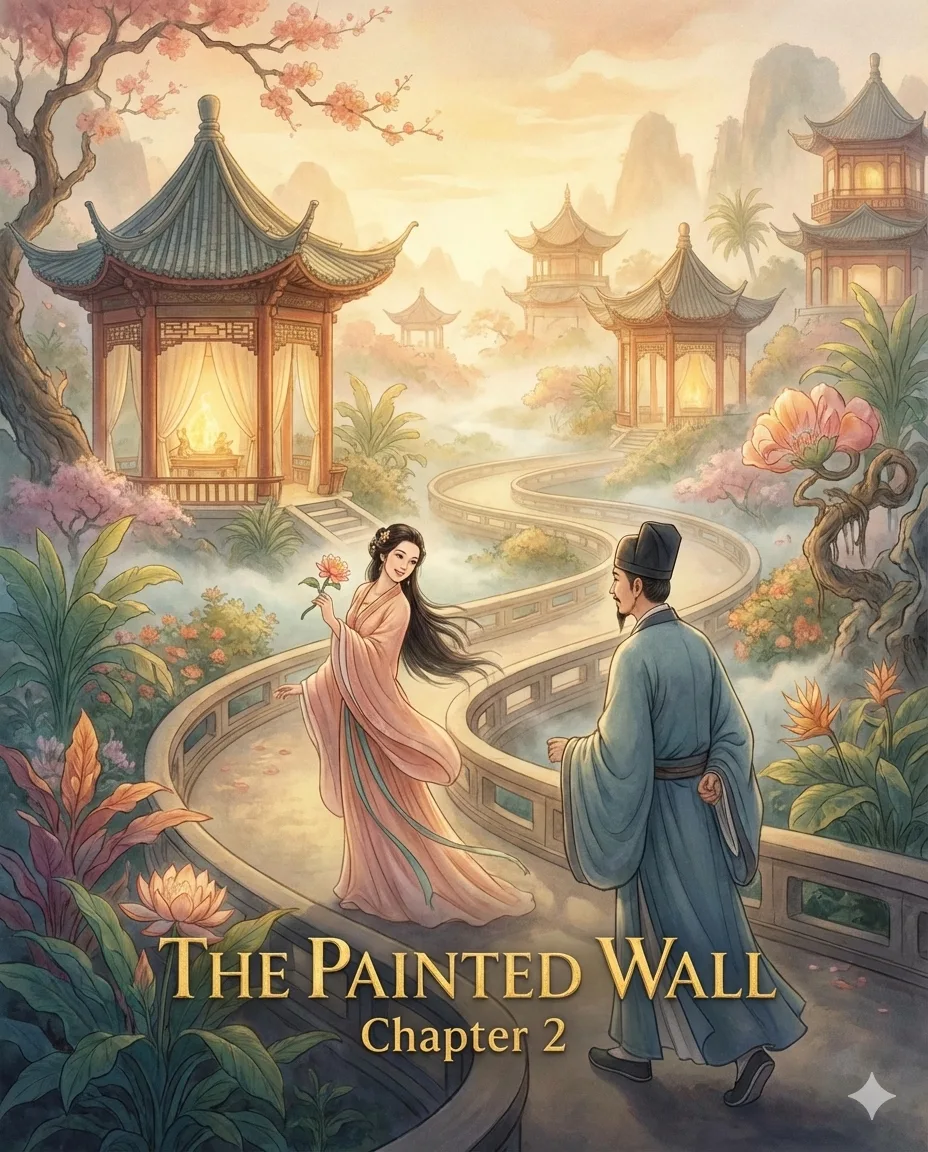
Chapter II · The Painted Chamber
Zhu stares so long that his spirit seems to drift away. Dazed in reverie, he feels his body rise and float like mist until he arrives inside the wall. There are layered halls and towers unlike the human world. An old monk preaches from a high seat, encircled by monks; Zhu finds himself standing among them.
After a while, someone tugs his robe. He looks back and sees the loose-haired girl, who smiles and walks away. He follows her through a winding corridor to a small room, hesitating at the door. She turns, lifts the flower in her hand, and beckons from afar. He enters. The chamber is empty; he embraces her, and she does not resist. They lie together like husband and wife. When it is done she shuts the door and leaves, telling him not to cough. At night she returns. This continues for two days.
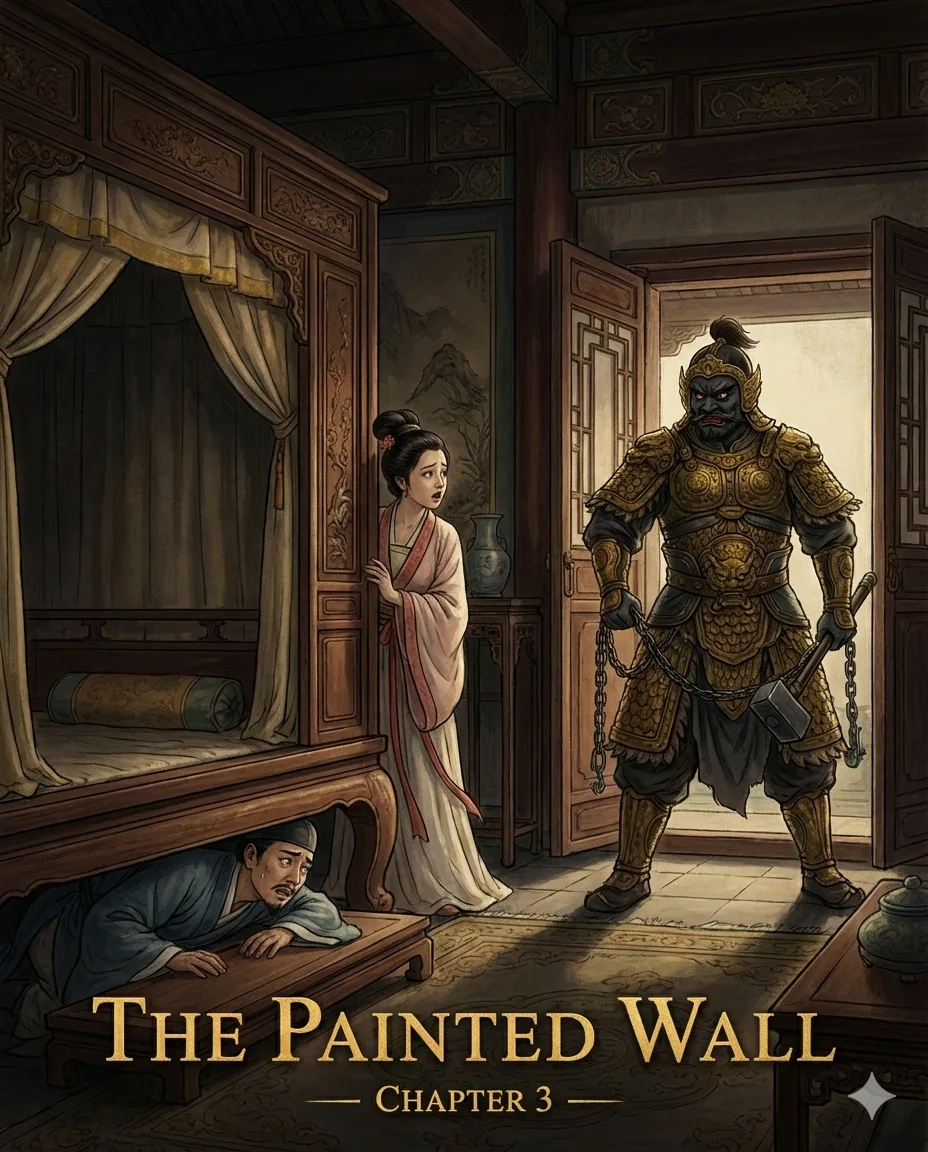
Chapter III · The Golden Armored Envoy
The other maidens discovered the affair and teased the girl, saying, “The child in your belly is already grown - will you still keep your hair loose like a maiden?” They fetched hairpins and earrings and urged her to coil her hair. She blushed and said nothing. One companion warned, “Sisters, we should not linger too long; the hosts may grow displeased.” They laughed and departed. Zhu saw her hair piled high like clouds, phoenix ornaments drooping, even more alluring than before.
With no one around, Zhu grew bolder and embraced her again. The scent of orchids and musk flooded his senses. Suddenly sharp boot steps and clanking chains erupted, followed by a din of voices. The girl startled upright; they peered out and saw a black-faced envoy in golden armor, chains coiled in his hands and a heavy hammer at his side, surrounded by maidens. He demanded, “Is everyone present?” They replied, “All are here.” He warned, “If anyone is hiding a mortal from the lower world, report at once and do not invite trouble.” They answered together, “No.” He turned like a hawk, searching.
The girl went pale with terror. “Hide beneath the bed,” she whispered, opening a small door in the wall and fleeing. Zhu crouched below, not daring to breathe. Boots entered the room, then departed. The clamour slowly receded, but voices still came and went outside. He remained curled up for a long time, ears ringing like cicadas and sparks flashing before his eyes, unable to endure the strain. He could only wait for the girl to return, forgetting even where he had come from.
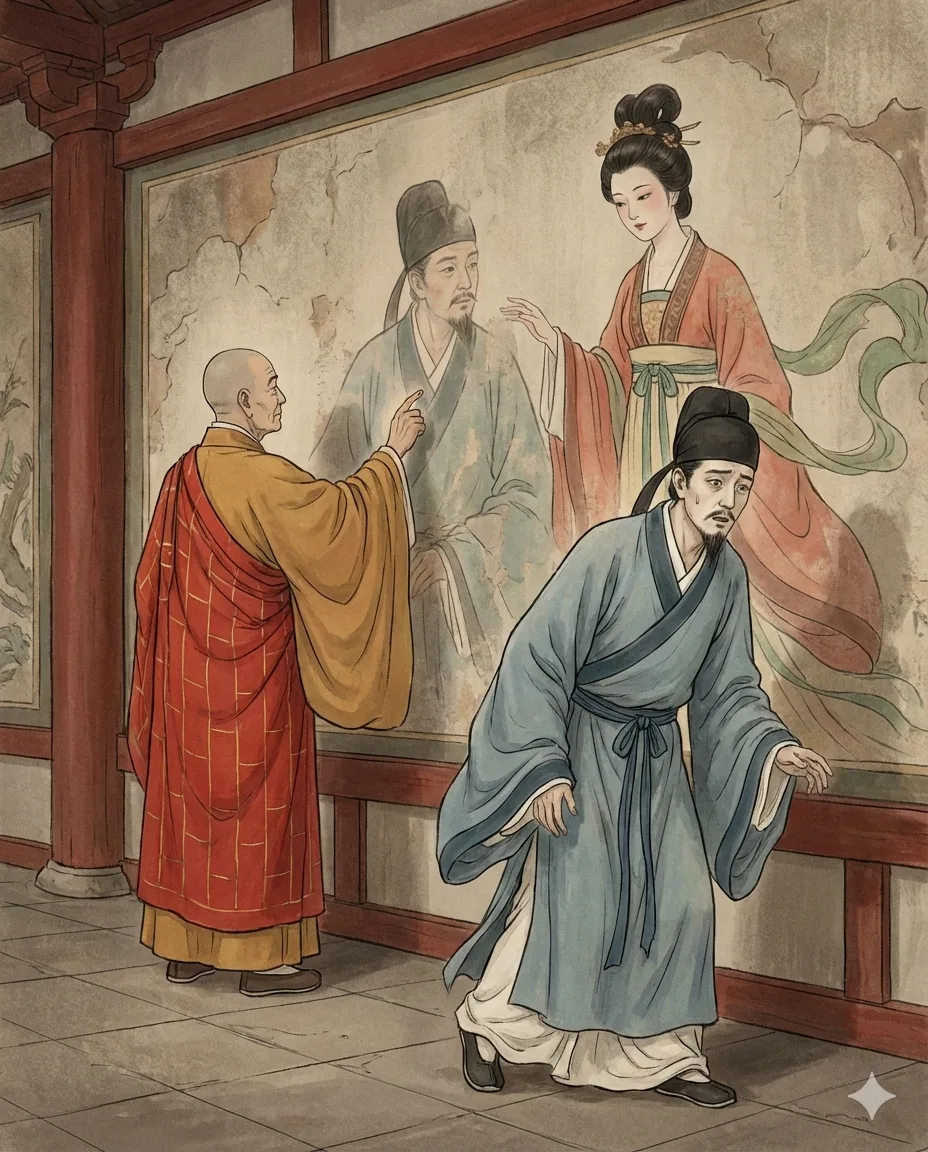
Chapter IV · Returning to the Wall
Meanwhile, Meng could not find Zhu in the hall and questioned the monk. The monk smiled, “He went to listen to the preaching.” When asked where, he said, “Not far.” After a while he tapped the wall with his finger and called, “Patron Zhu, why have you wandered so long?” On the mural Zhu’s painted image appeared, standing still with his head inclined, as if listening. The monk called again, “Your companion has waited long enough.” Zhu then drifted down from the wall, ashen and stunned, legs weak.
Meng asked what had happened; Zhu explained that he had been hiding under a bed when a thunderous knock sounded, and he stepped outside to find himself returned to the human world. They looked again at the flower-holding maiden in the mural and saw her hair now coiled high, no longer loose like a girl. Zhu bowed and asked the monk to explain. The monk only smiled: “Illusion arises from the human mind; how can I, a monk, explain it?” Zhu left with his chest knotted in confusion, Meng in silent dread. Together they rose to leave and descended the steps out of the temple.
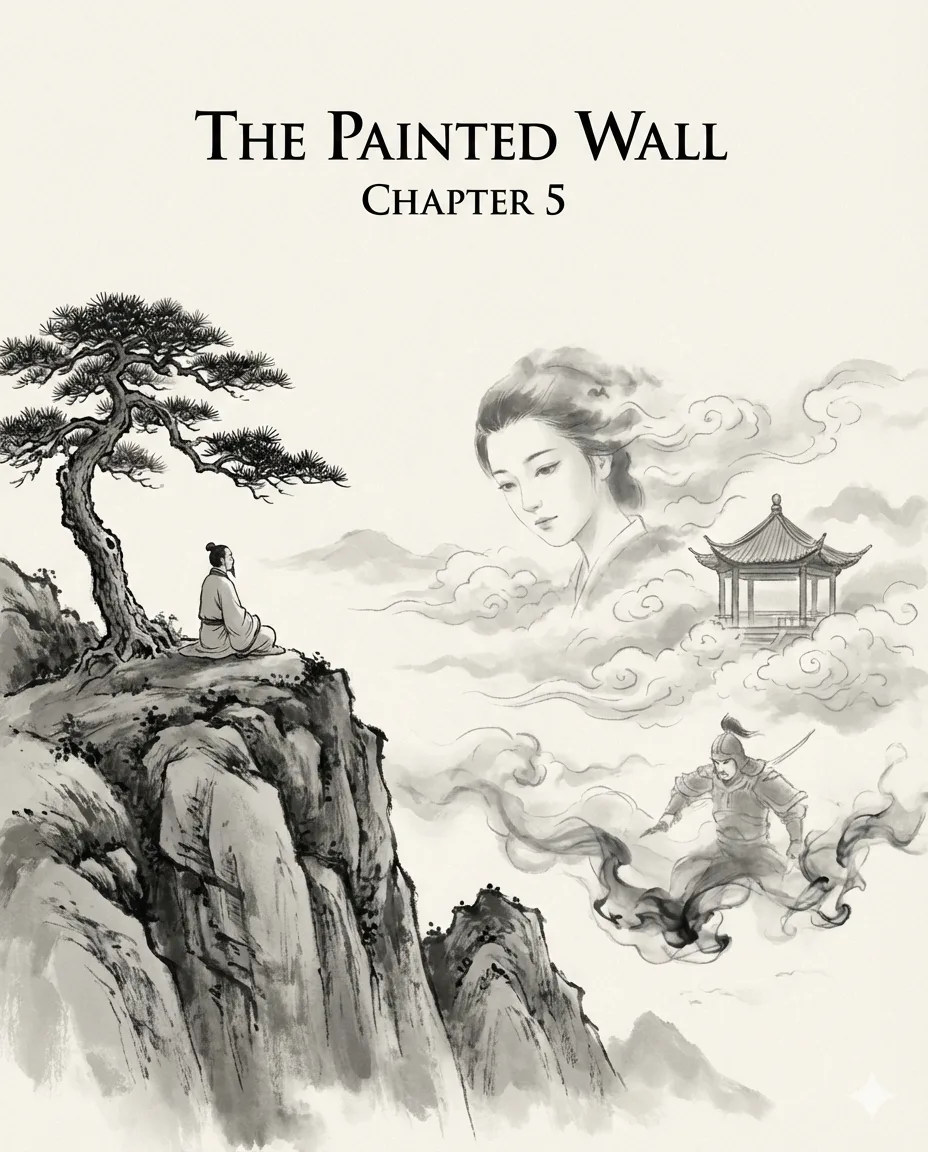
Chapter V · The Chronicler’s Verdict
The chronicler writes: all illusions are born from the heart - words that sound like the counsel of a true sage. When a person harbors lust, a lewd realm is born; when a person harbors contempt, a realm of terror appears. Bodhisattvas, seeking to enlighten the foolish, conjure a thousand visions, yet every vision arises from the mind itself. The monk’s compassionate warnings were urgent, but the foolish man did not awaken at once, nor retreat into the mountains to cultivate the way.