Chapter I · The Ten Kings Hall
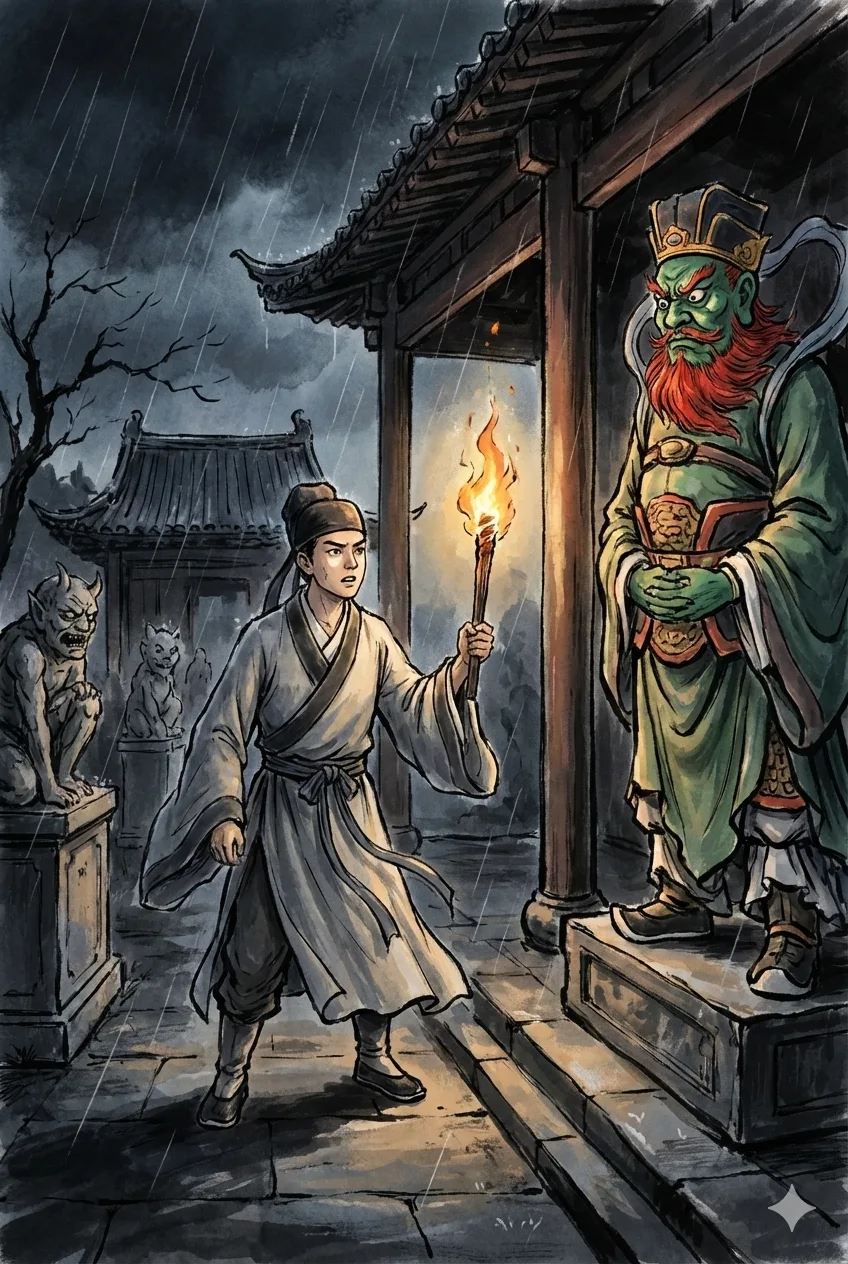
In Lingyang there lived a scholar named Zhu Erdan, styled Xiaoming. He was bold and openhearted but rather slow-witted; though diligent in study, he had not yet made a name. One day at a literary gathering, his friends teased him: “If you dare to go to the Ten Kings Hall at midnight and carry back the judge from the left corridor, we will all pool money to feast you.”
In that hall the gods and demons were carved of wood, lifelike in their paint. On the eastern side stood a judge with a green face and red beard, fierce and menacing. It was said that at night one could hear the corridors filled with interrogation; visitors trembled at the very thought. Zhu Erdan laughed, rose, and went at once. Before long he returned, the judge on his back, and set him on the table. He poured three cups of wine in libation. The others quaked and begged him to take the statue back. Zhu poured wine on the ground and vowed, “This disciple was reckless and rude; may the grand master not be offended. My humble home is near - if it pleases you, come share a drink and do not mind the boundary between human and ghost.” With that he carried the judge away.
Chapter II · The Judge Visits
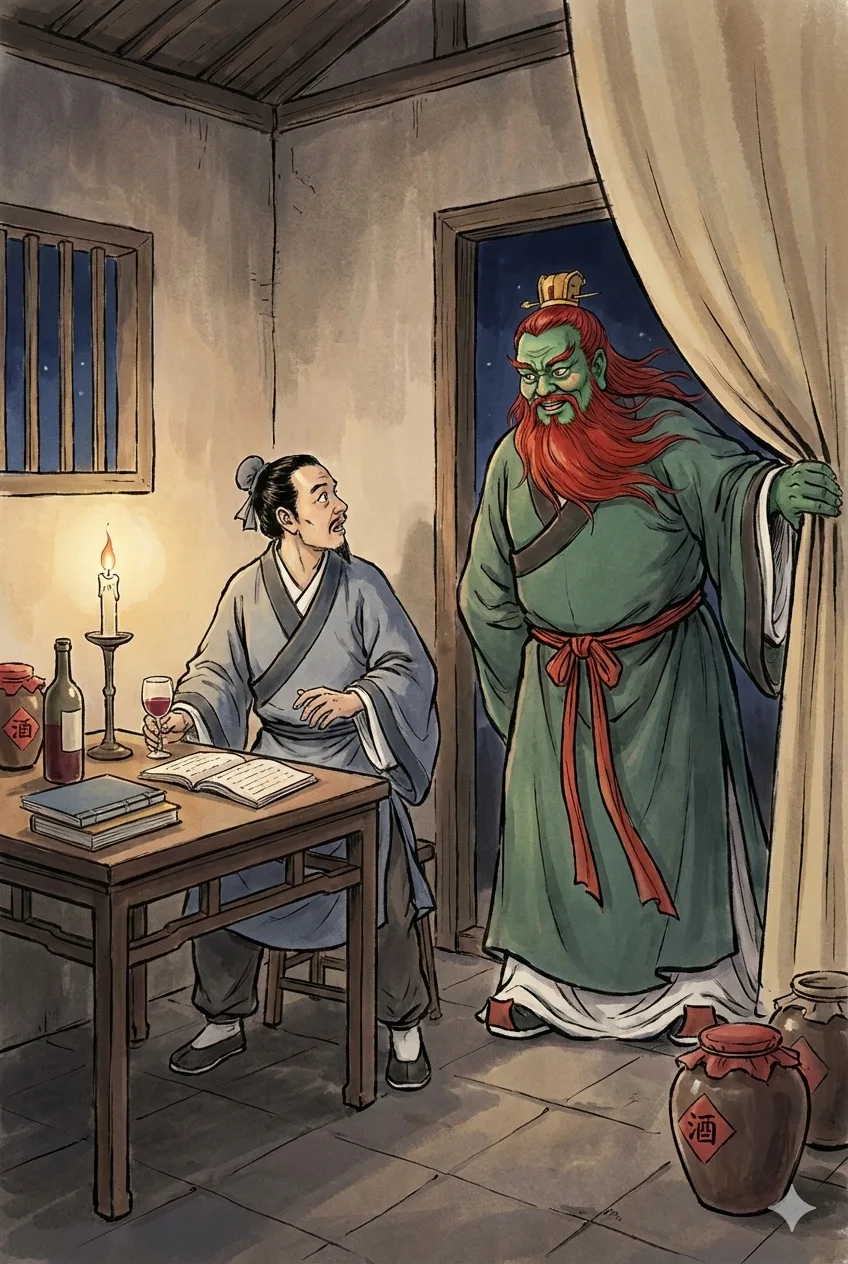
The next day his friends indeed hosted a feast. At dusk Zhu Erdan returned half drunk and, still unsatisfied, lit a lamp and drank alone. Suddenly someone lifted the curtain and entered - it was the judge. Zhu sprang up: “Am I about to die? I offended you last night - have you come with the axe?” The judge smiled beneath his thick beard: “No. You invited me with noble courtesy; tonight I have leisure and have come to keep the appointment.”
Zhu rejoiced, pulled him to sit, and hurried to wash the cups and light the stove. “The weather is warm; we can drink cold,” the judge said. Zhu obeyed, set the bottle on the table, and told his family to prepare food. His wife was terrified and begged him not to go out, but he would not listen. They exchanged cups and drank. Zhu asked his name; the judge answered, “My surname is Lu, but I have no given name.” They discussed classical books, and his answers rang like bells. Zhu asked, “Do you know the exam essays?” Lu replied, “I can distinguish beauty from ugliness. In the underworld we read and write much as in the human world.” He drank ten cups in a row. Zhu, already drunk from a whole day, slumped over and slept. When he woke, the candle was dim and the ghost guest was gone.
Chapter III · The Gift of a Heart
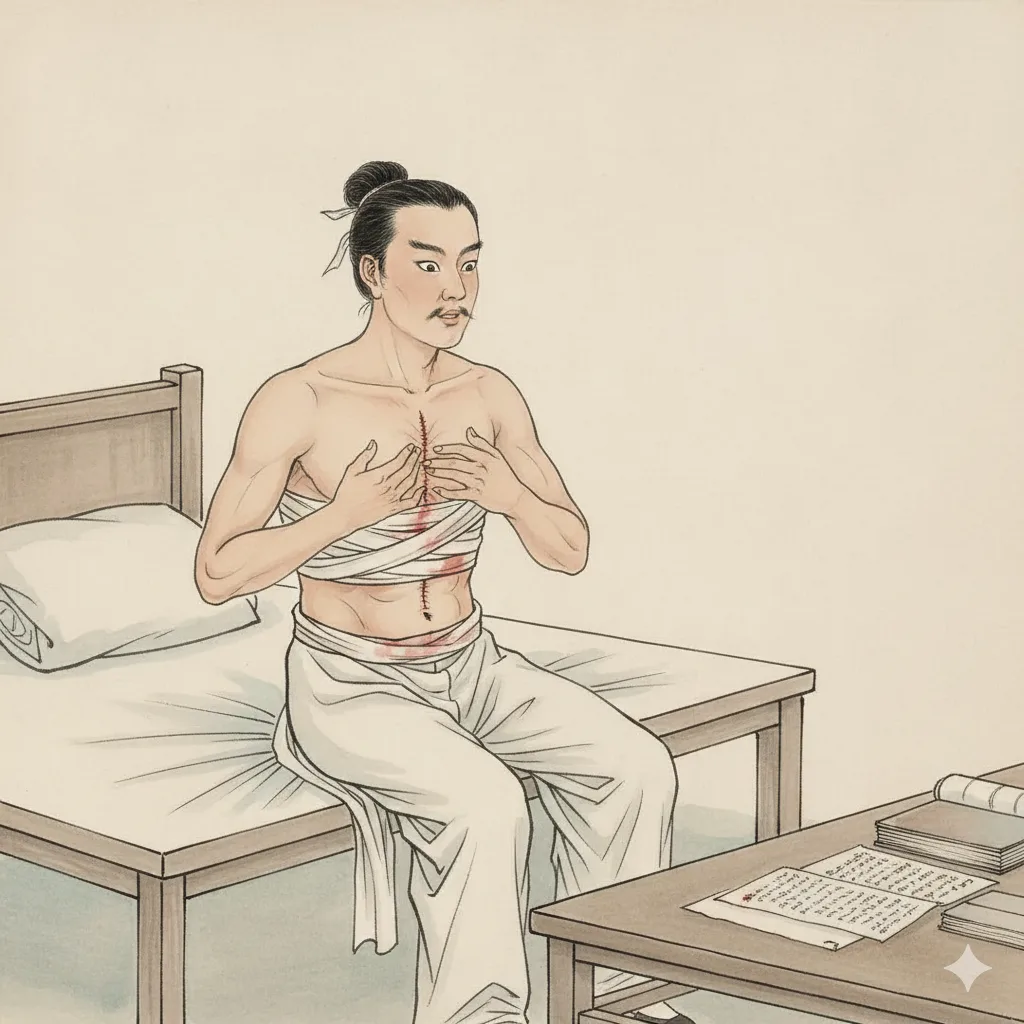
From then on Lu visited every two or three days. Their friendship deepened; sometimes they slept foot to foot. Zhu showed him his drafts, and Lu red-penned them all as poor. One night Zhu, drunk, fell asleep first while Lu still drank. In his drunken dream Zhu felt a faint pain in his organs. He awoke to see Lu sitting upright by the bed, his belly opened, his intestines laid out in order. Zhu gasped, “We have no feud - why kill me?” Lu laughed: “Do not fear. I am exchanging your heart for a wiser one.”
Lu calmly returned the organs, stitched him up, and bound his waist with a foot-binding cloth. When the work was done there was no blood on the bed; Zhu only felt a numbness in his belly. He saw a lump of flesh on the table and asked what it was. “Your heart,” Lu said. “Your essays are slow because your heart's pores are blocked. I selected a keen heart from the underworld and gave it to you; this one I will return to fill the vacancy.” Lu rose, shut the door, and left. By morning the seam had closed, leaving a thin red line.
From then on Zhu's writing advanced greatly; he remembered everything at a glance. When he showed new essays, Lu said, “They are good now. But your fortune is thin; you will not rise to great rank - only the provincial exams.” “When will I pass?” Zhu asked. “This year you will take first,” Lu replied. He soon took first in the examinations, and in the autumn contest he placed among the top. His classmates, once mocking, were stunned by his papers. They begged Zhu to introduce them, hoping to befriend Lu. Lu agreed, but when he arrived with his red beard and lightning-bright eyes, they turned pale and slipped away. Zhu then asked another favor: “If hearts can be exchanged, can faces be changed? My wife is my first partner; her figure is fair but her face is not. Would you use your blade again?” Lu smiled. “Very well. I will find a chance.”
Chapter IV · The Borrowed Head
A few days later, Lu knocked at midnight. Zhu hurried to greet him and saw a bundle in his robe. “I searched long for what you requested,” Lu said. “Only now have I found the head of a beautiful woman.” Zhu peered in; the neck was still wet with blood. Lu urged him to move quickly and not rouse the dogs. The inner door was bolted, but Lu pushed once and it opened. They entered the bedroom where Zhu's wife slept on her side. Lu handed the head to Zhu to hold, drew a white blade from his boot, pressed it to her neck, and with a force like cutting soft tofu, severed her head. It fell by the pillow. He immediately set the new head on her neck, aligned it, and pressed it into place. He tucked the pillow at her shoulder and told Zhu to bury the old head in a quiet spot, then left.
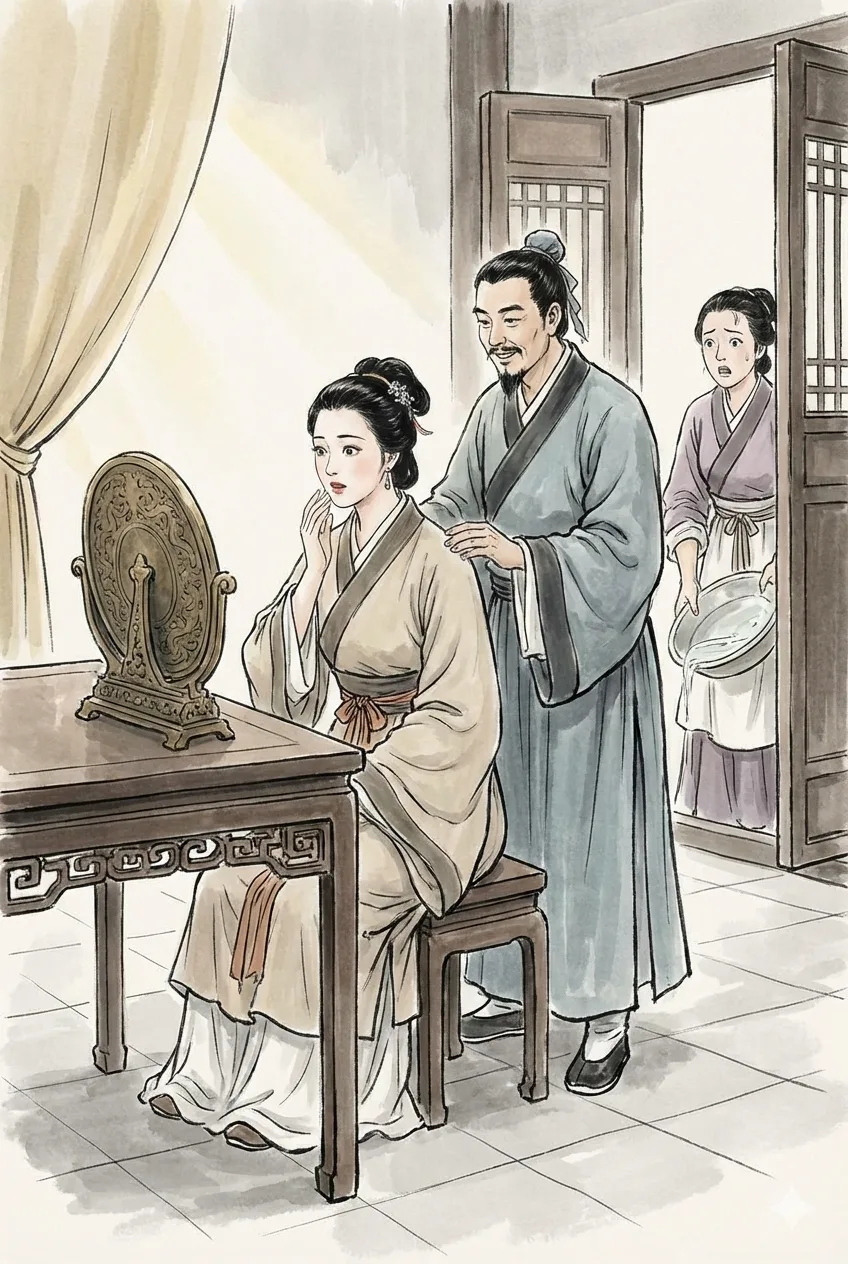
Zhu's wife woke to a faint numbness at her neck and a roughness on her cheeks. She rubbed them and found flakes of blood, and in terror called for water. The maid saw her face smeared in blood and nearly fainted. She washed, and the basin turned red. When she lifted her head, her face was entirely different; she seized the mirror and stared, bewildered. Zhu entered and explained. When she looked closely, her brows now swept into her temples and dimples appeared at her cheeks - she looked like a woman painted in a scroll. She opened her collar and saw a red seam circling her neck, the flesh above and below clearly distinct.
Chapter V · The Wronged Daughter
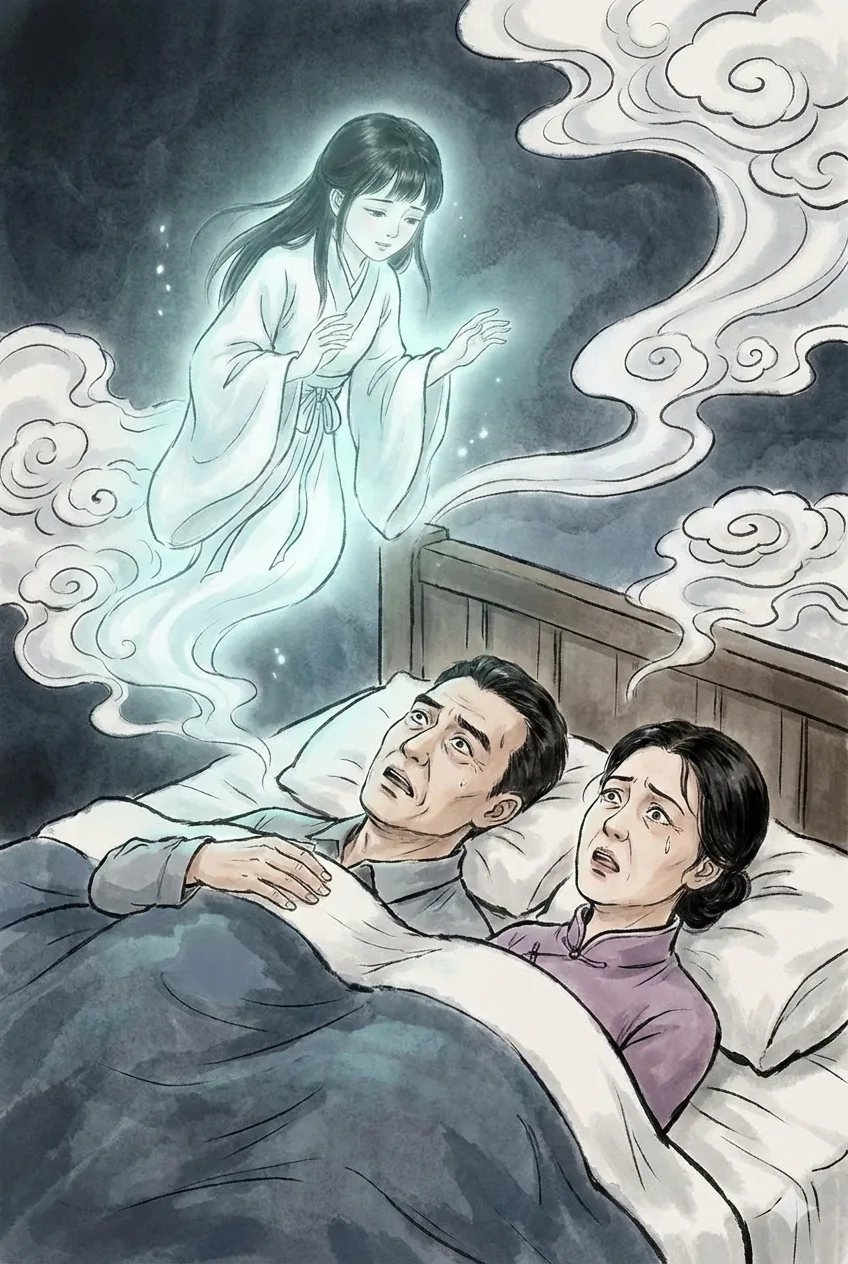
Earlier, the imperial censor Wu had a daughter of great beauty. She was betrothed twice, but both fiancés died before marriage, so at nineteen she remained unwed. On Lantern Festival she visited the Ten Kings Hall. Among the crowds a scoundrel noticed her beauty, traced her home, climbed over the wall at night, and broke into her bedroom. He killed a maid, tried to force himself on her, and in rage killed her as well. The household found the bodies and placed her head beside her body, weeping through the night. By morning the head was gone. The family beat the servants, believing dogs had dragged it away. Wu reported the crime and the prefect ordered the killer captured, but three months passed without result.
Rumors of Zhu's wife's new head reached Wu. Suspicious, he sent an old nurse to investigate. She saw Zhu's wife and fled in terror, reporting back. Wu, unable to resolve his doubts, accused Zhu of sorcery and went to question him. Zhu said, “My wife dreamed her head was changed; I do not understand how. To say I killed your daughter is unjust.” Wu did not believe him and sued. The officials interrogated Zhu's household; all the testimony matched his. The prefect could not decide and released him. Zhu sought Lu's help. “This is not hard,” Lu said. “I will have the girl speak herself.”
That night Wu dreamed his daughter saying, “I was killed by Yang Danian of Suxi, not by Scholar Zhu. Because he found his wife insufficiently beautiful, Judge Lu took my head and gave it to her. My body died but my head lived; do not feud with the Zhu family.” Wu told his wife and found she had the same dream. He reported it to the authorities. They found Yang Danian, seized him, and he confessed. Wu visited Zhu and asked to see the wife; they became in-laws. Zhu's wife's original head was joined to Wu's daughter's body and buried.
Chapter VI · The Ghost's Return
Zhu Erdan entered the metropolitan examinations three times and was dismissed each time for violating exam rules. He grew disheartened. Thirty years passed. One night Lu told him, “Your life will soon end.” “Can you save me?” Zhu asked. “Life and death are fixed by heaven,” Lu replied. “To the enlightened, they are one.” Zhu accepted this. He prepared his shroud and coffin, dressed in full robes, and died. The next day, as his wife mourned, Zhu drifted in from outside. She feared him, but he said, “I am a ghost, yet no different from when alive. I worry for you and our child.” He comforted her, saying he now served in the underworld under Lu's patronage. At night Lu joined him; their voices sounded like the living. After midnight they vanished. Thereafter Zhu returned every few days, sometimes spending the night, managing household affairs, and teaching his son by lamplight. As the boy grew, Zhu came less often, eventually only once a month.
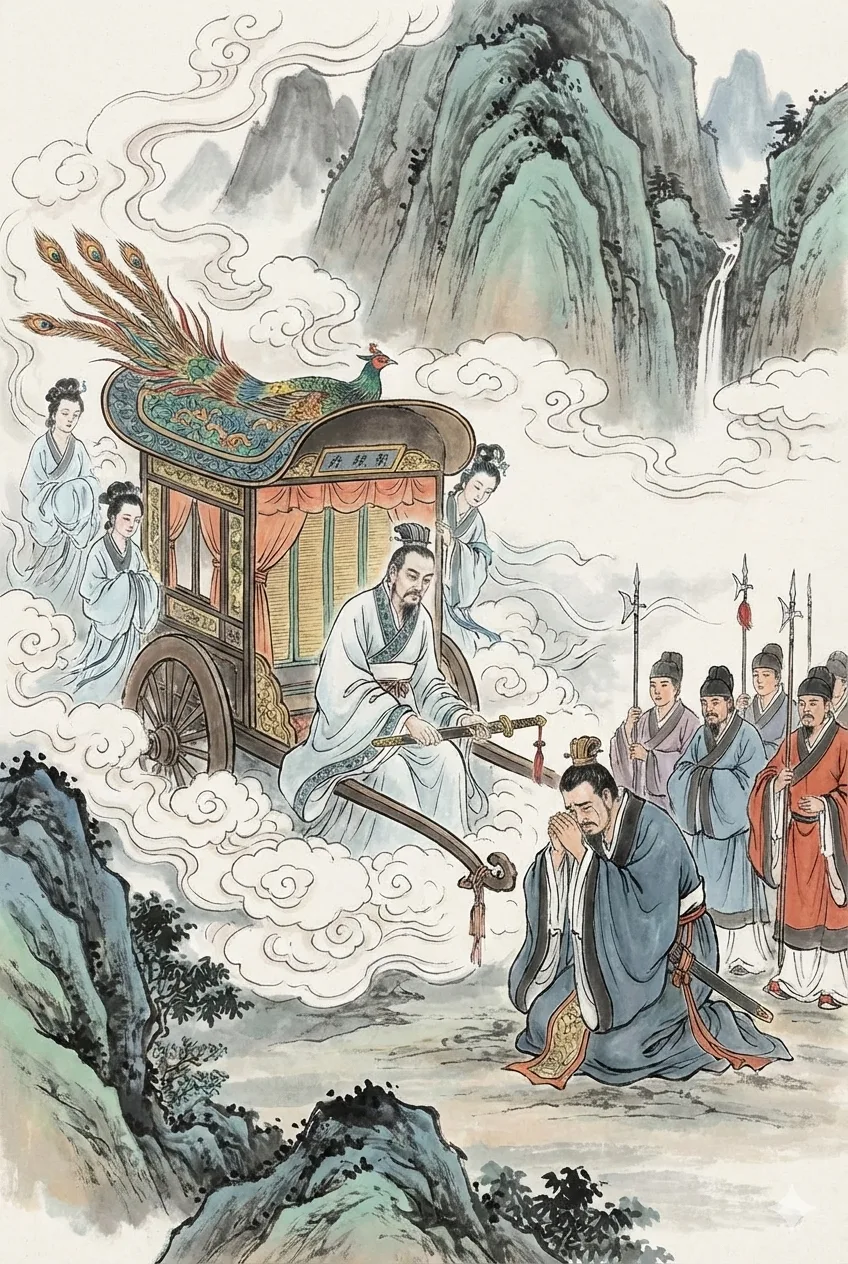
One night he came again and said, “Tonight is our final farewell.” He had been appointed Lord of Taihua and must leave for a distant post. He told his son, “Be a good man and do not disgrace my household. In ten years we will meet.” He left and never returned. Later the son, Zhu Wei, passed the civil service exam and was appointed a royal envoy. On his way to sacrifice at Mount Hua, he met a procession with feathered banners; in the carriage sat his father. Zhu Wei knelt and wept. His father said, “Your official reputation is good; I can rest now,” and sent him a sword with the inscription: “Let courage be great, the heart small; let wisdom be round, conduct square.” The procession vanished like wind. Zhu Wei later rose to high office and passed the sword to his fourth son, who became chief censor.
The chronicler says: to cut the legs of a crane or lengthen those of a duck to force equality is delusion; to graft flowers onto another tree is clever. Yet how much more astonishing is it to cut open hearts and alter heads. Judge Lu, with an ugly exterior, hid a beautiful moral bone. From the late Ming to now it has not been long - does the Judge of Lingyang still live? If he still has power, I would gladly drive his carriage.