Chapter I · The Fugitive Concubine
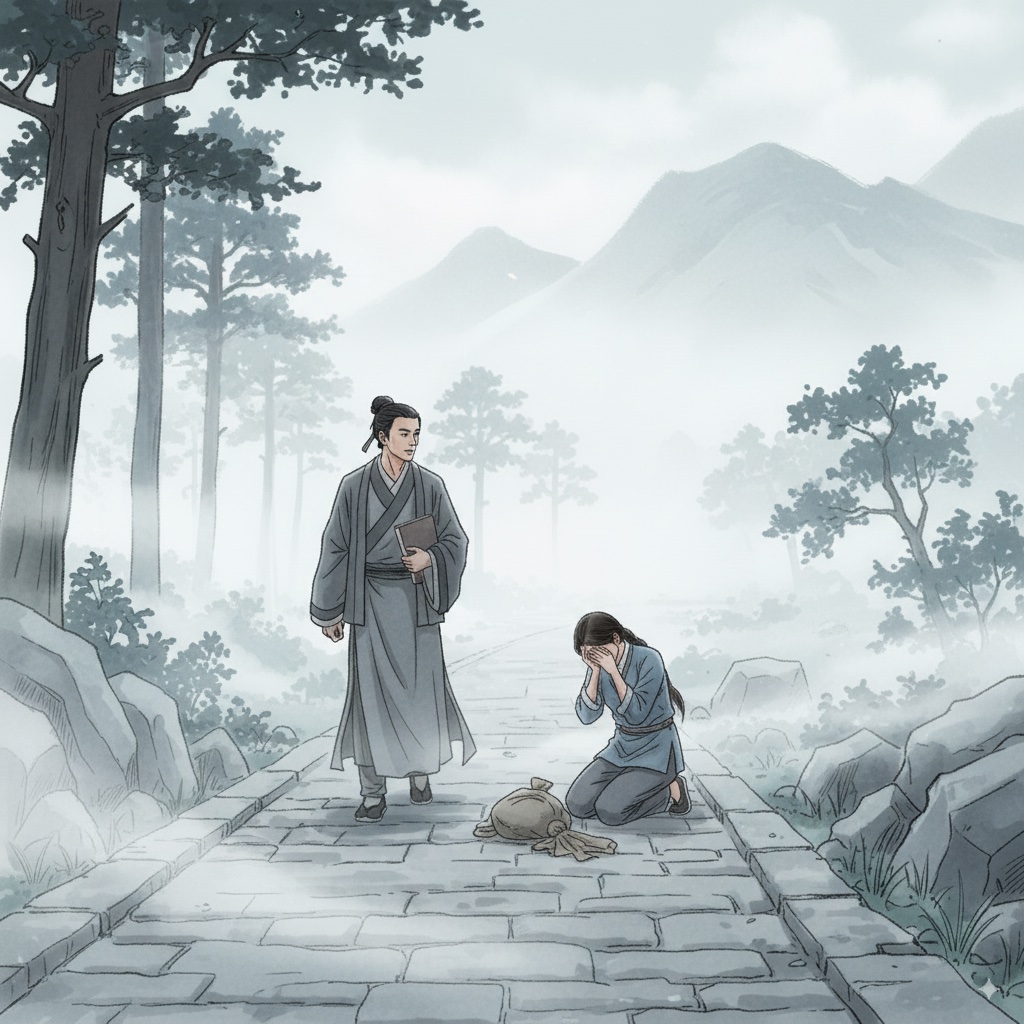
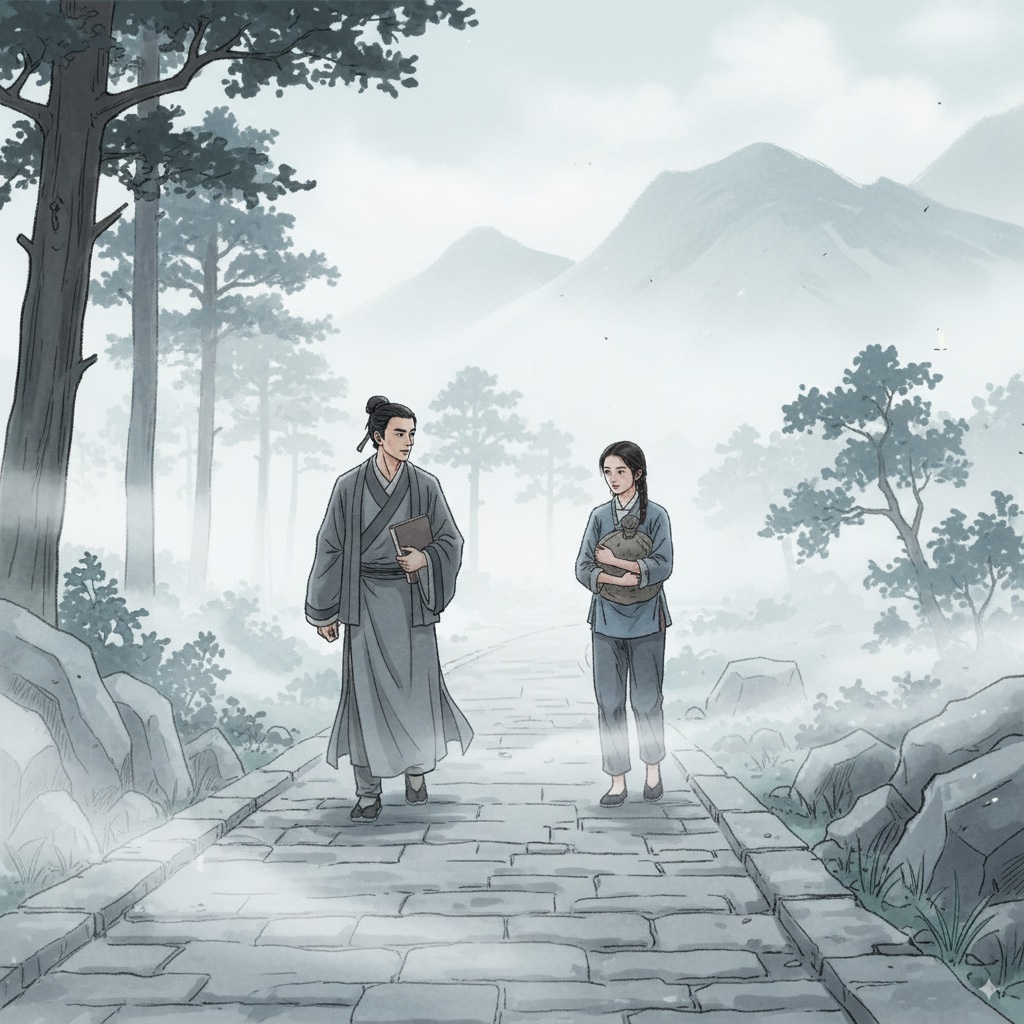
Near Taiyuan there was a scholar named Wang Sheng. One morning at daybreak he met a maiden hurrying along the road with a bundle in her arms. She was sixteen or seventeen, graceful and lovely, yet her steps showed great weariness.
Wang quickly caught up to her and asked, “Why are you alone on the road before dawn?” The girl said, “You are merely a passerby. You cannot share my troubles, so why question me?” Wang replied, “Tell me what grieves you. Perhaps I can help and will certainly not refuse.”
With a sorrowful expression she said, “My parents covet money. They sold me to a wealthy house as a concubine. The principal wife is fiercely jealous—she curses me every morning and beats me every night. I can no longer endure it and wish to flee far away.” Wang asked, “Where will you go?” She answered, “I am fleeing for my life and have no fixed destination.”
Wang said, “My home is close by. Come there and rest for a while.” The girl gladly consented. Wang carried her bundle and led her back. Seeing no other people, she asked, “Why is no family here?” Wang said, “This is my study.” She replied, “This place is excellent. If you take pity and let me live, please keep it secret and tell no one.” Wang promised and that very night shared his bed with her.
He hid her in an inner chamber for many days. Later he hinted at the matter to his wife Chen, who suspected the girl was a concubine fleeing a great clan and urged Wang to send her away, but he would not listen.
Chapter II · The Taoist’s Warning
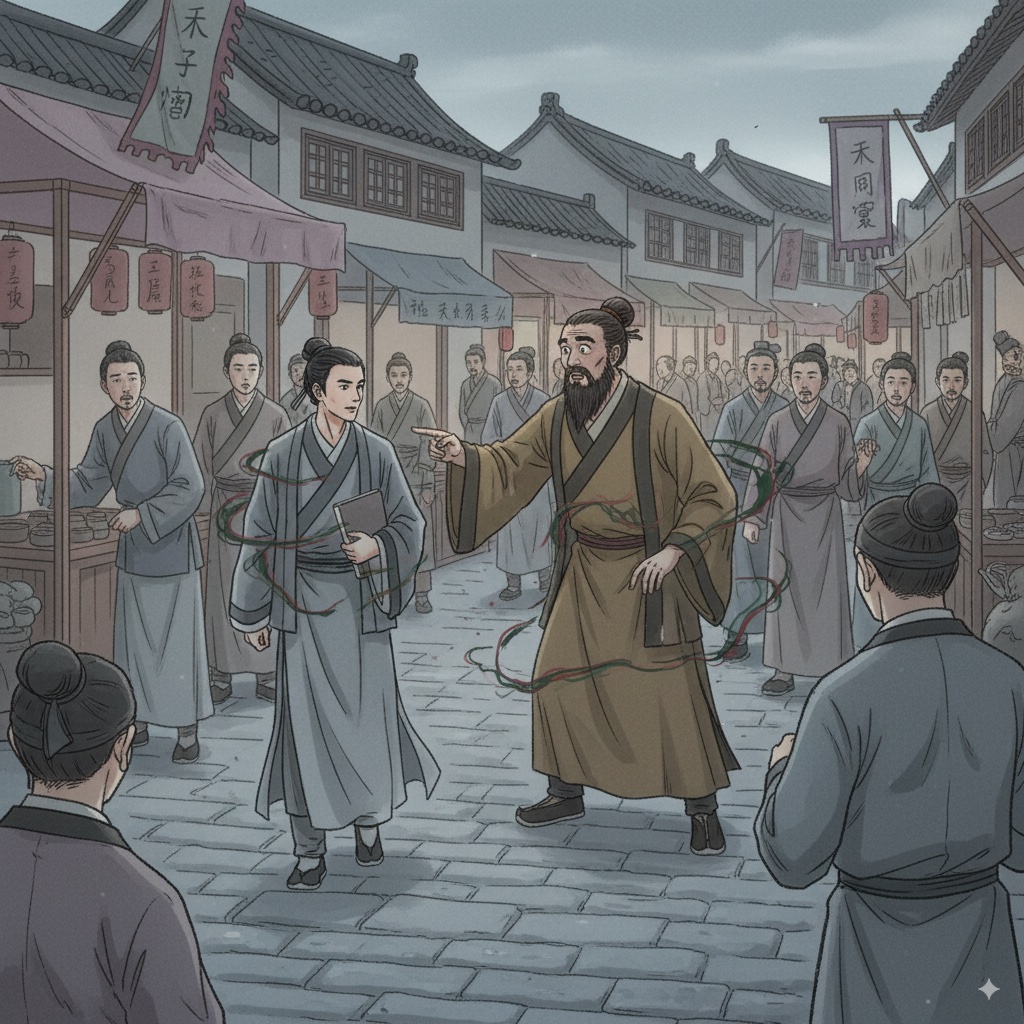
One day Wang went to the market and unexpectedly met a Taoist priest. The Taoist looked startled and asked, “Whom have you encountered lately?” Wang answered, “No one.” The Taoist said, “Your entire body is entangled in evil vapors. How can you say you have met no one?” Wang argued vehemently that it was not so.
Sighing, the Taoist walked away and said, “How hard it is to fathom! People can be on the brink of death and still remain deluded.” Wang sensed that the words were unusual and began to doubt the girl, yet he reminded himself that she was plainly a lovely maiden—how could she be a demon? Perhaps, he thought, the Taoist invented the warning to demand money for exorcism.
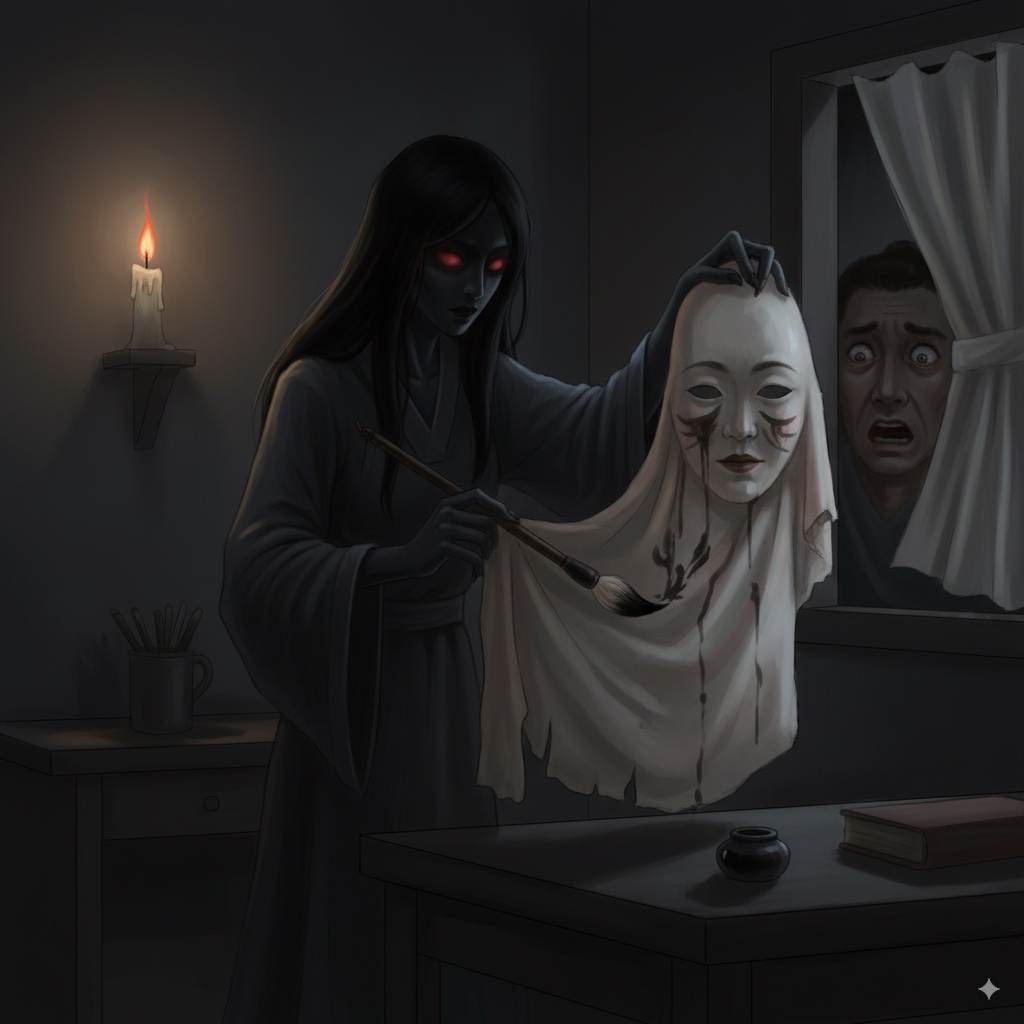
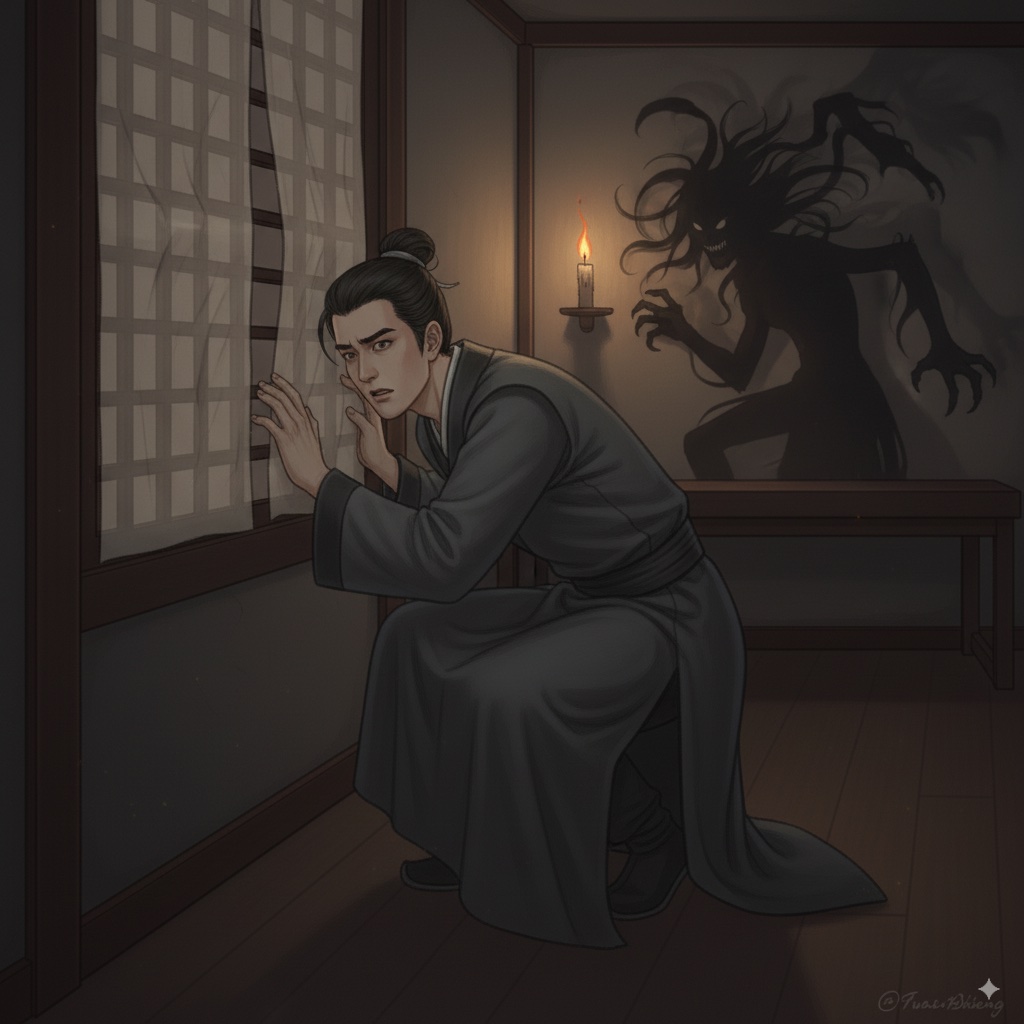
When he reached his study he saw the main door bolted from within. Suspicion stirred, so he climbed a broken wall and entered the courtyard. The inner door was also shut. He crept to the window and peered inside.
He saw a hideous demon with a bluish face and saw-toothed fangs spreading a human skin on the bed and painting it with colored brushes. When the painting was finished, the demon threw aside the brush, lifted the skin, shook it like a garment, and draped it over itself. Instantly it became the beautiful girl again. Wang, terrified, scrambled away on all fours like a frightened beast. He hurried to find the Taoist, but the priest was gone. Only after searching everywhere outside the city did he meet him again and beg for rescue.
Chapter III · The Broken Ward
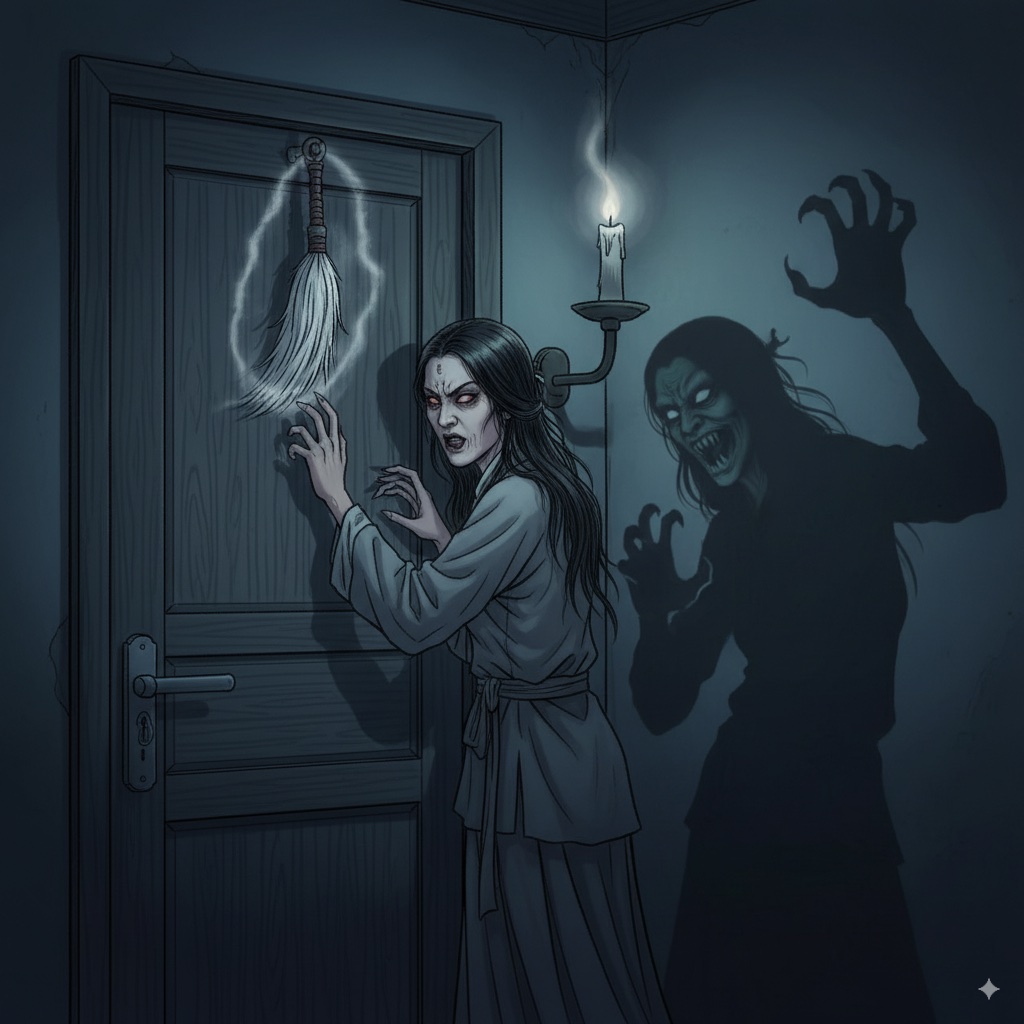
The Taoist said, “Let me drive it away. That thing has cultivated with difficulty and only just found someone to replace it so it may enter a human birth. I cannot bear to kill it.” He handed Wang his whisk and told him to hang it on the bedroom door, then arranged to meet him later at the Temple of the Green Emperor.
Wang dared not stay in the study. He slept in the inner quarters and hung up the whisk. At the first watch of the night he heard a rustling outside. Too frightened to look, he asked his wife to observe. She saw the girl approach, grind her teeth at the sight of the whisk, and stand there for a long while before leaving.
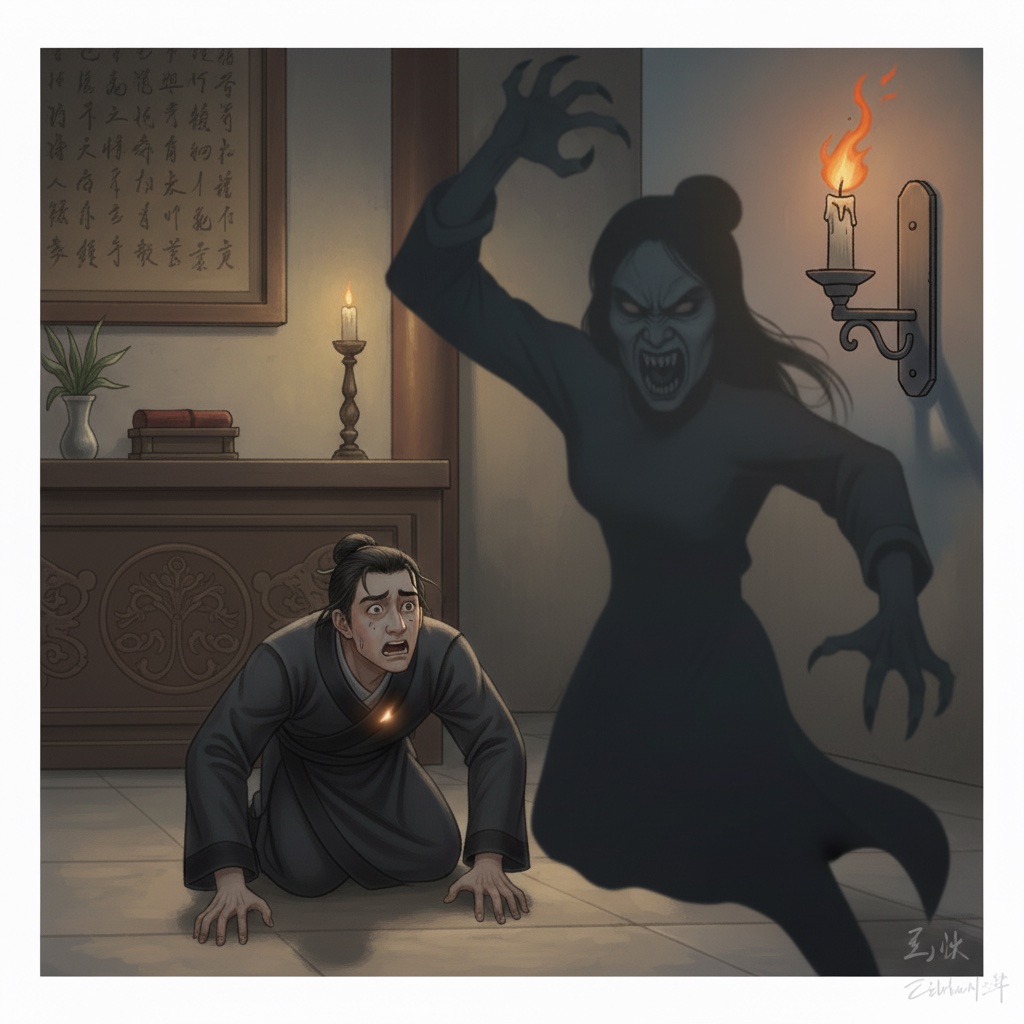
After a short time she returned and cursed loudly, “That Taoist wishes to frighten me? I refuse to give up! Must I spit out meat already in my mouth?” She snatched down the whisk, tore it to pieces, broke the door, and burst in. The demon climbed straight onto Wang’s bed, clawed open his chest and abdomen, wrenched out his heart, and departed. Chen shrieked, and when a maid brought a candle they saw Wang dead, his belly a bloody ruin.
Chapter IV · The Demon Seized
At daybreak Chen sent Wang’s younger brother Erlang to summon the Taoist. The priest grew angry. “I pitied it, yet the wicked creature dared behave so wildly!” He followed Erlang to the house, but the girl was gone. The Taoist looked around and said, “Fortunately it has not fled far.” He asked, “Who lives in the southern courtyard?” Erlang answered, “That is my residence.” “The demon is there now,” the Taoist declared.
Erlang was startled. “I went to the temple at dawn to look for you and truly do not know. Let me ask at home.” He left and soon returned, saying, “Indeed, an old woman came early this morning seeking hire as a servant. My wife kept her, and she has not yet gone.” “That is the creature,” said the Taoist.
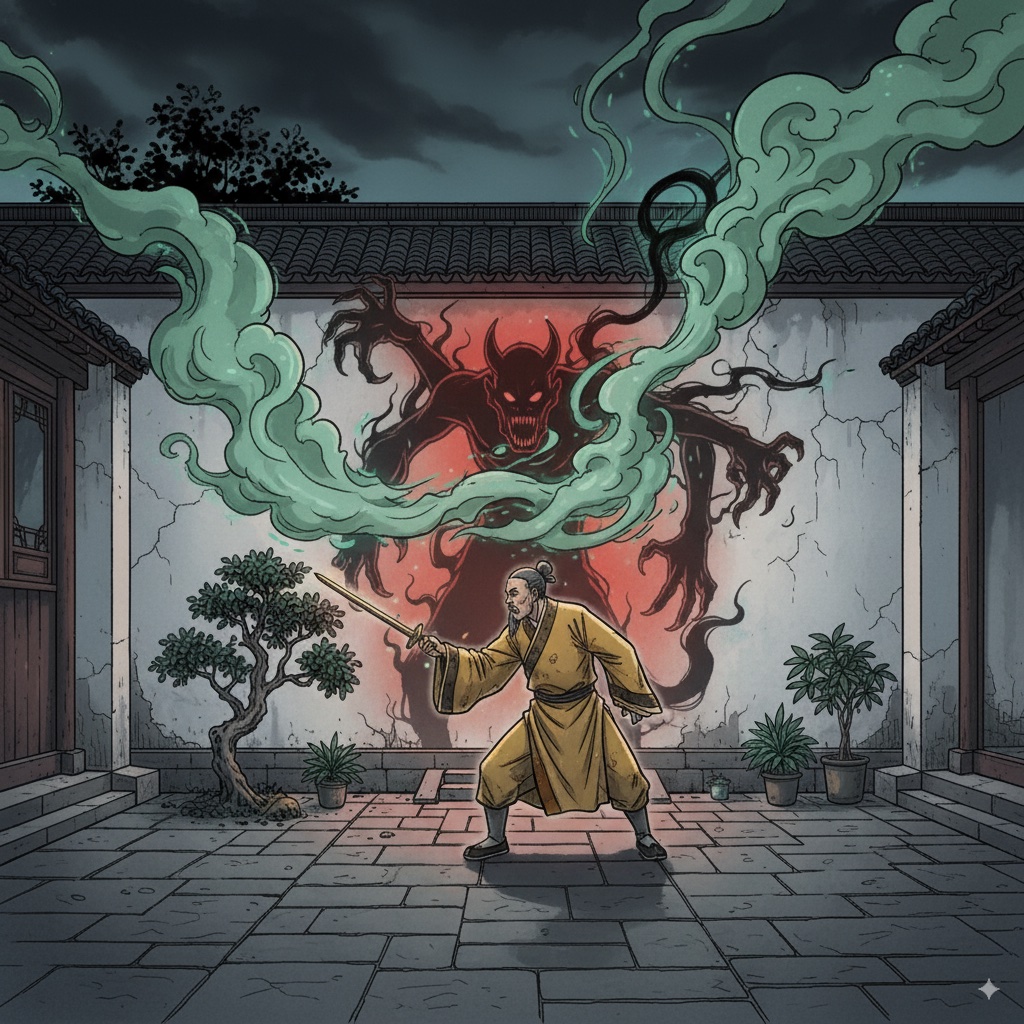
They went together to Erlang’s house. The Taoist stood in the courtyard holding a wooden sword and shouted, “Sinful demon, return my whisk!” The old woman inside panicked, ran out the door, and tried to escape. The Taoist struck her; she fell, and the human skin split apart with a crack to reveal the demon’s true form, lying on the ground howling like a hog. The Taoist cut off its head with the sword. Its body turned into thick smoke that circled on the ground. He drew out a gourd, removed the stopper, and set it over the smoke. There was a whistling sound, and in an instant the smoke was sucked completely inside. He sealed the mouth of the gourd, placed it in his satchel, rolled up the human skin—which had eyebrows, eyes, hands, and feet complete—and packed it away.
Chapter V · A Heart Returned
Chen knelt at the gate and begged the Taoist to use his arts to revive Wang. He said he lacked such power, but after pondering he added, “There is one who may succeed. In the marketplace is a mad beggar who often lies in filth. Go and kowtow to him. Even if he curses you, do not take offense.”
Erlang knew the beggar and went with her. They found him in the street, singing wildly with snot hanging three feet long and filth stinking so badly no one could draw near. Chen knelt and shuffled on her knees before him. The beggar laughed, “Does the beauty love me?” She explained the situation. He laughed louder, “Everyone can be your husband. Why save him?” Still she pleaded again and again.
Finally he spat out a handful of phlegm and saliva, held it to her mouth, and said, “Eat it!” Chen’s face flushed, yet remembering the Taoist’s warning she forced herself to swallow it mouthful by mouthful. The phlegm went down like a lump of cotton, crackling as it descended and lodging in her chest. The beggar laughed, cried, “The beauty loves me!” and walked away. Chen and Erlang followed him into a temple, but he was nowhere to be found.
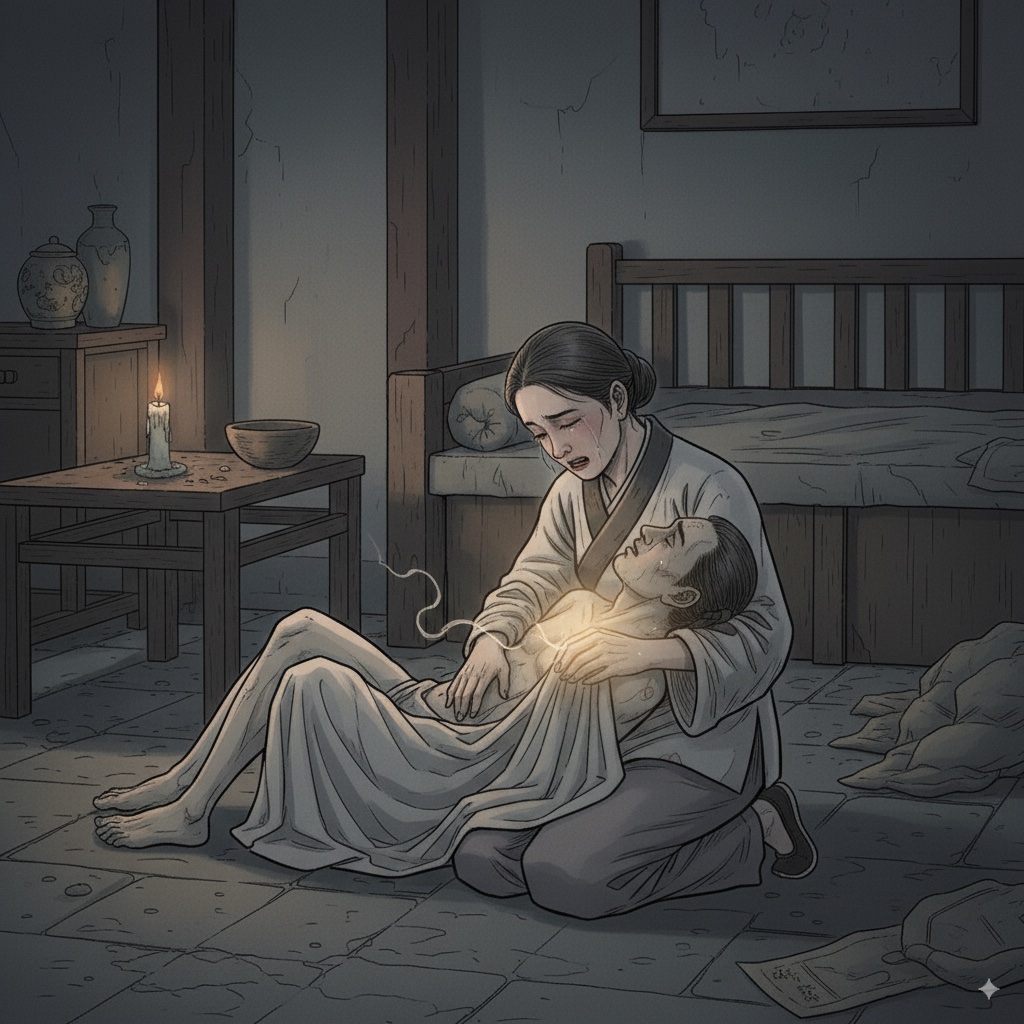
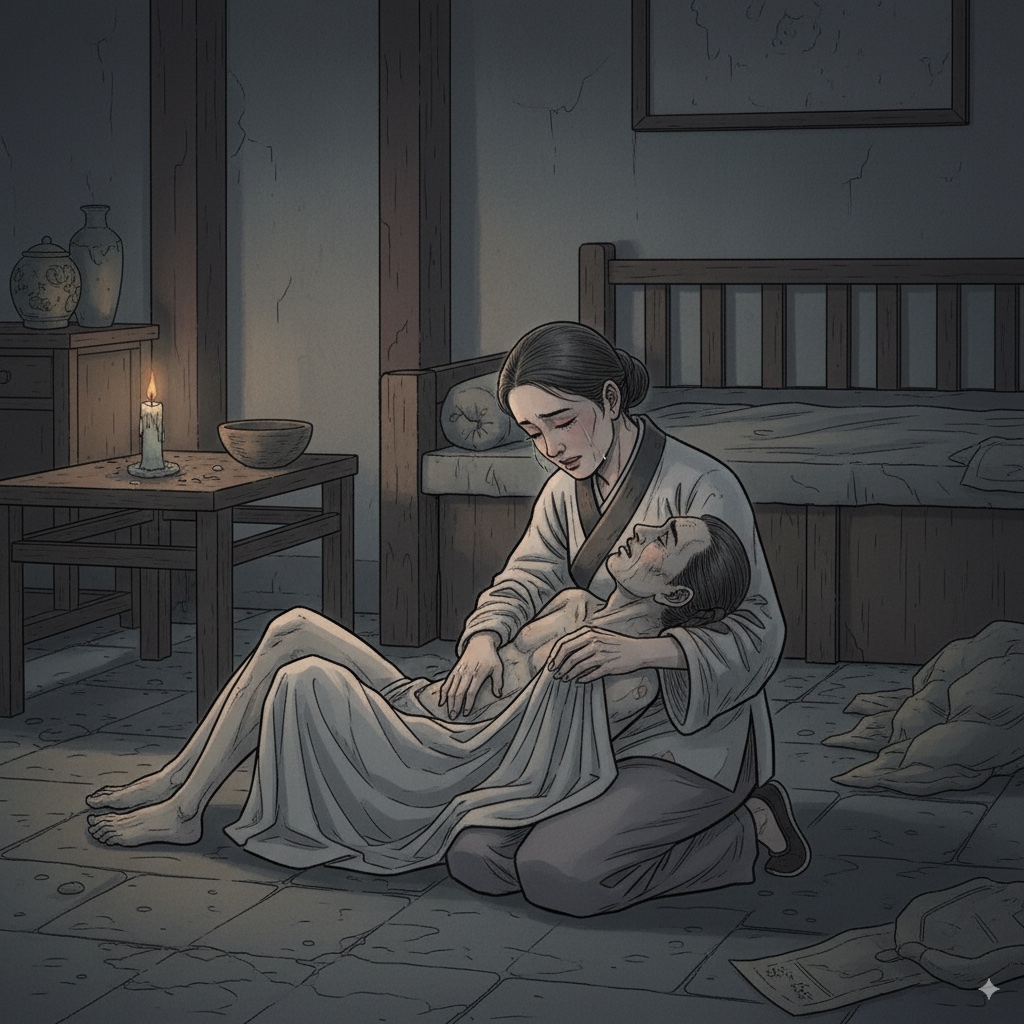
Back home, Chen mourned her husband’s cruel death and the humiliation she had endured. Since no one dared approach the corpse, she washed away the blood herself and replaced the viscera, weeping as she worked. When her tears were exhausted she felt nauseous; the hard lump in her chest rose into her throat and, before she could turn aside, fell into Wang’s chest cavity. To her astonishment it was a human heart, beating and giving off vapor like steam. She pressed his chest together and bound it with silk. Warmth slowly returned to his body. At midnight his nostrils already held a faint breath, and by dawn Wang revived. He said he felt as if waking from a dream, only that his belly faintly ached. The wound healed, leaving a scab the size of a copper coin.
Recorder of Strange Tales remarks: “People are truly foolish. Plainly it is a demon, yet they take it for a beauty; plainly it is sincere warning, yet they think it deceit. He coveted another’s looks without restraint, so his own wife had to swallow another man’s spittle and regard it as sweet. Human goodness and evil are repaid according to Heaven’s principle, but muddle-headed people never awaken. How pitiable!”