Chapter I · The Deserted Temple
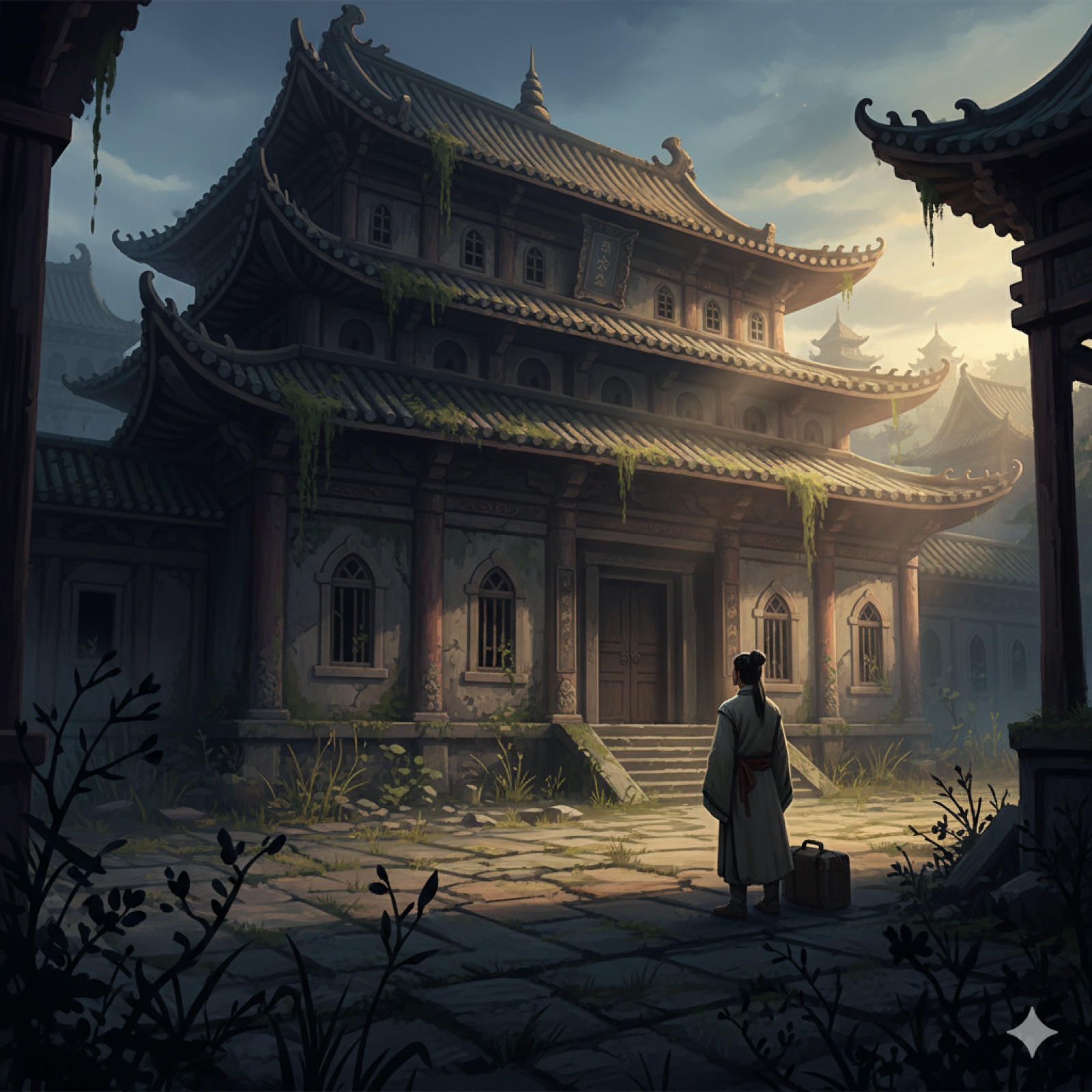
Ning Caichen of Zhejiang was frank, upright, and self-disciplined. He often said, “In this life I cherish no woman other than my wife.” When he traveled to Jinhua for the provincial examinations he rested outside the north gate at a temple whose halls and pagoda were splendid yet whose courtyards had grown over with tall weeds. Monk’s quarters flanked east and west, their doors hanging ajar; only a small room on the south side had a new lock.
In the eastern corner beyond the main hall, stands of bamboo thick as two arms embraced the stone steps. A pond below brimmed with wild lotus blossoms. Finding the place secluded and delightful—and because lodging inside the city was costly while the examiners were in town—Ning decided to stay and waited for monks to return.
At dusk a burly man arrived and unlocked the southern room. Ning hurried over, paid his respects, and asked to lodge there. The man replied, “There is no resident here. I am also borrowing it. If you do not mind the desolation, I would be honored to trade instruction morning and night.” Delighted, Ning spread dry straw for bedding, propped a board for a desk, and planned to stay several days. Under the bright moon the two talked along the hall veranda, giving their names. The man introduced himself as Yan Chixia. Ning guessed he was another candidate, yet his accent was not of Zhejiang; Yan said he hailed from Qin and spoke with disarming candor. When conversation waned they clasped hands and retired to their rooms.
Chapter II · Moonlight Visitor
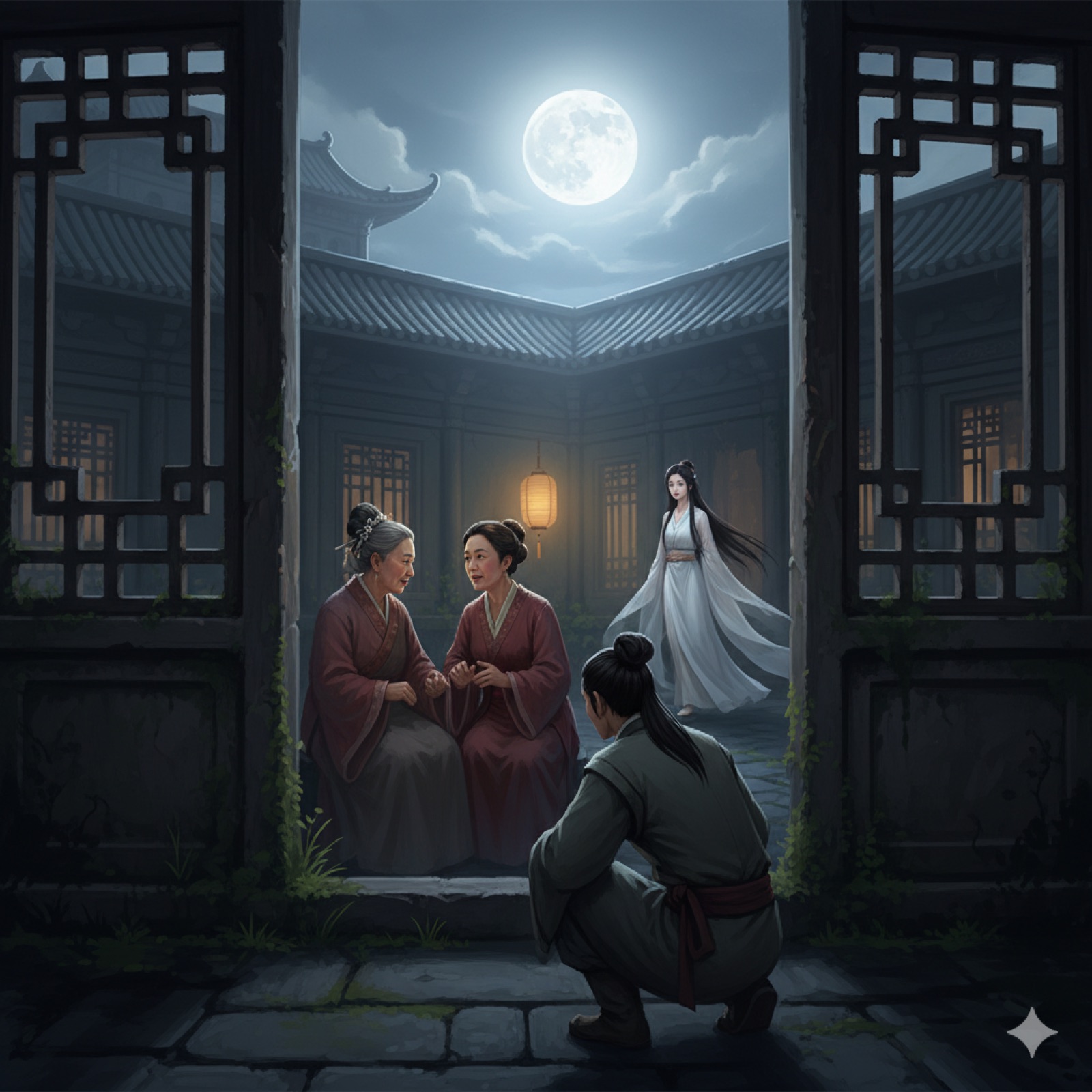
New to the place, Ning lay awake. He heard whispering north of the building, as if a household lived beyond the wall. Creeping beneath a stone window he peered out and saw a small courtyard with a matron in her forties and an elderly woman dressed in a faded red gown with a large silver comb in her hair. The two conversed beneath the moon.
“Why has Xiaoqian not come?” asked the matron. “She should be arriving soon,” said the old woman. “Did she complain about you, Grandmother?” “I heard nothing—only that she seemed sullen.” “Then you must treat the girl kindly,” the matron urged. While they spoke a maiden of seventeen or eighteen approached, beauty unrivaled. The old woman laughed, “One should not speak of people behind their backs. We were just mentioning you, little enchantress, and here you slip in without a sound. Fortunately we did not slander you.” She added, “Such a painted beauty—if I were a man, I would be bewitched myself.” The girl replied, “If Grandmother does not praise me, who will?” The matron addressed her as well, though Ning could not make out the words. Thinking them simply neighbors’ wives, he returned to bed.
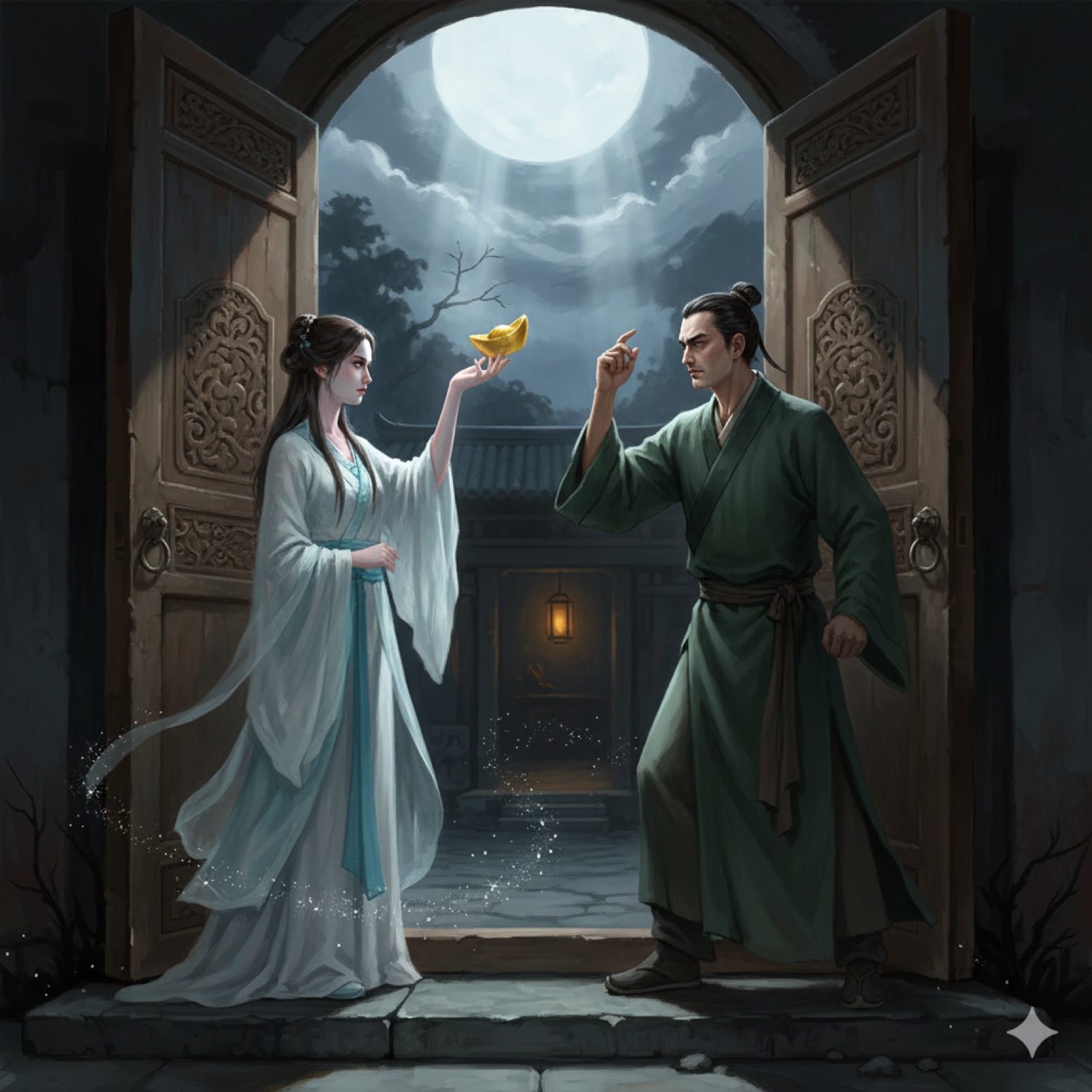
As he dozed, someone entered his room—the very girl from the northern courtyard. Startled, he demanded her purpose. She smiled, “The moon is bright and I cannot sleep. I came to share warmth with you.” Ning answered sternly, “You should fear gossip, and I dread slander. One misstep destroys a lifetime of honor.” “No one will know in the night,” she coaxed. Ning rebuked her again. She lingered, searching for words, until he barked, “Leave! Otherwise I will summon the man in the south room.” Frightened, she withdrew, but returned to lay a bar of gold upon his quilt. Ning seized it and flung it outside. “Ill-gotten gain—do not soil my purse!” Ashamed, she picked it up and murmured, “This fellow’s heart is forged of stone.”
Chapter III · The Confession
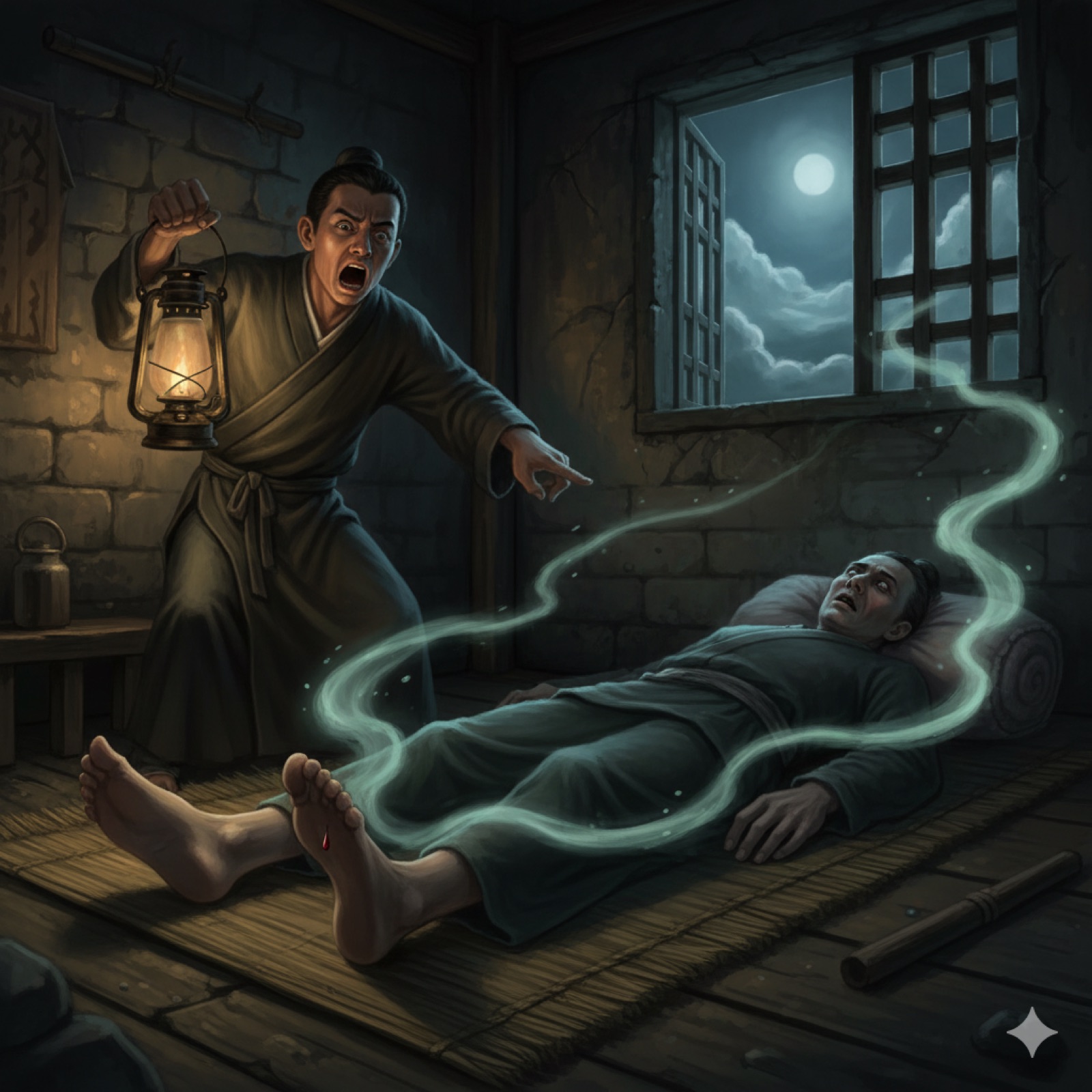
At dawn a scholar from Lanxi arrived with a servant to sit the exam, lodging in the east wing. That night he suddenly died; a puncture like an awl marked the sole of his foot, from which a thin thread of blood seeped. No one knew the cause. By the next evening his servant died the same way.
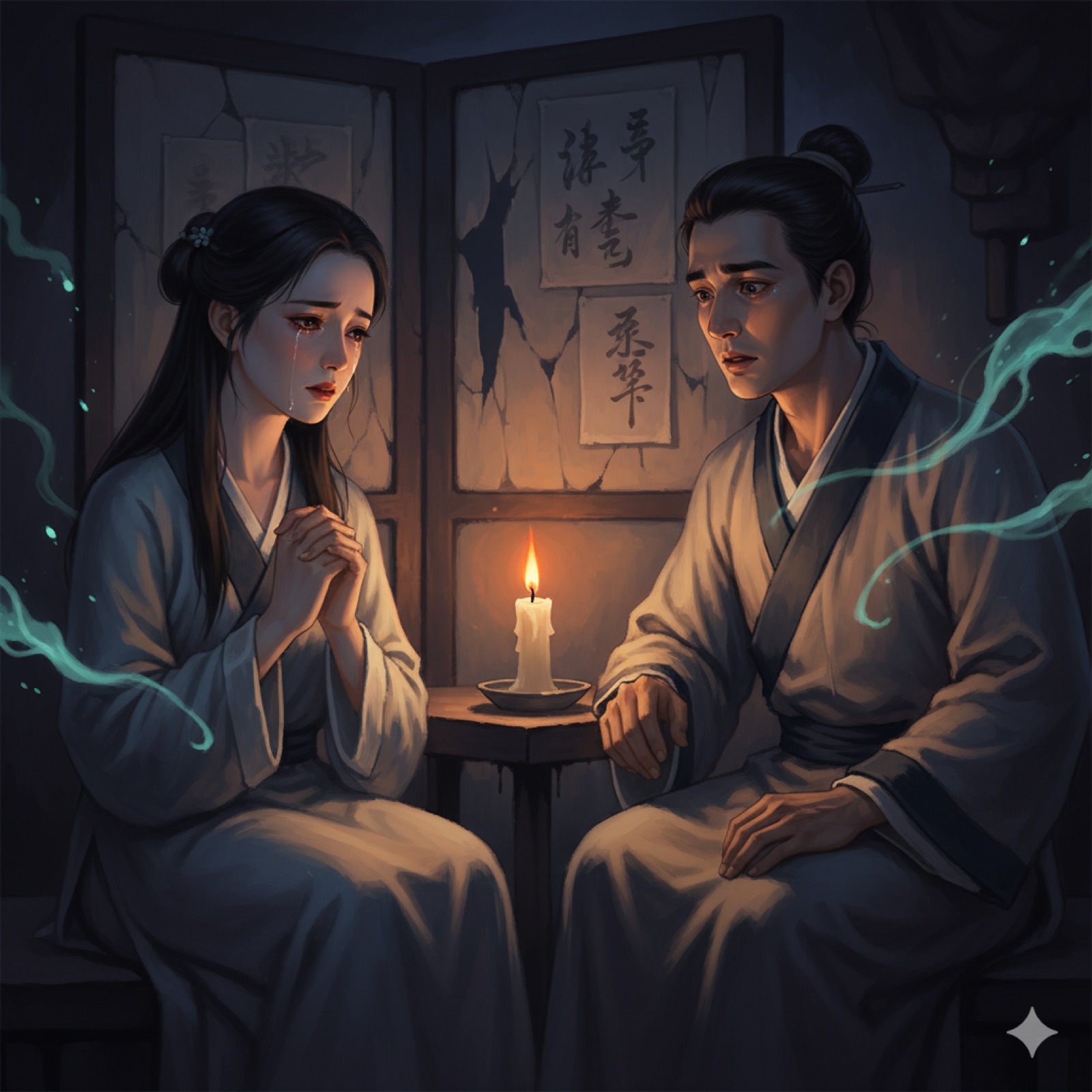
When Yan Chixia returned Ning told him everything. Yan believed ghosts were at work, but Ning’s righteous nature made him unafraid. At midnight the maiden came again. “Of all the men I have met, none is as steadfast as you,” she said. “You are truly a sage. I dare not deceive you. My name is Nie Xiaoqian. I died at eighteen and was buried beside this temple. A demon coerced me into this shameful business. I do not willingly expose myself to men. The temple now holds no more prey; I fear the night-roving demon will arrive.”
Ning asked for a solution. Xiaoqian said, “Share quarters with Master Yan and you will be spared.” “Why not tempt him instead?” Ning asked. “He is extraordinary; I dare not approach.” She explained, “Those who grow intimate with me are secretly pierced in the sole with a needle so they swoon; I draw their blood to feed the demon. Or I offer gold that is nothing but a rakshasa’s bone—if kept, hearts and livers are taken. These are the demon’s lures to match men’s desires.”
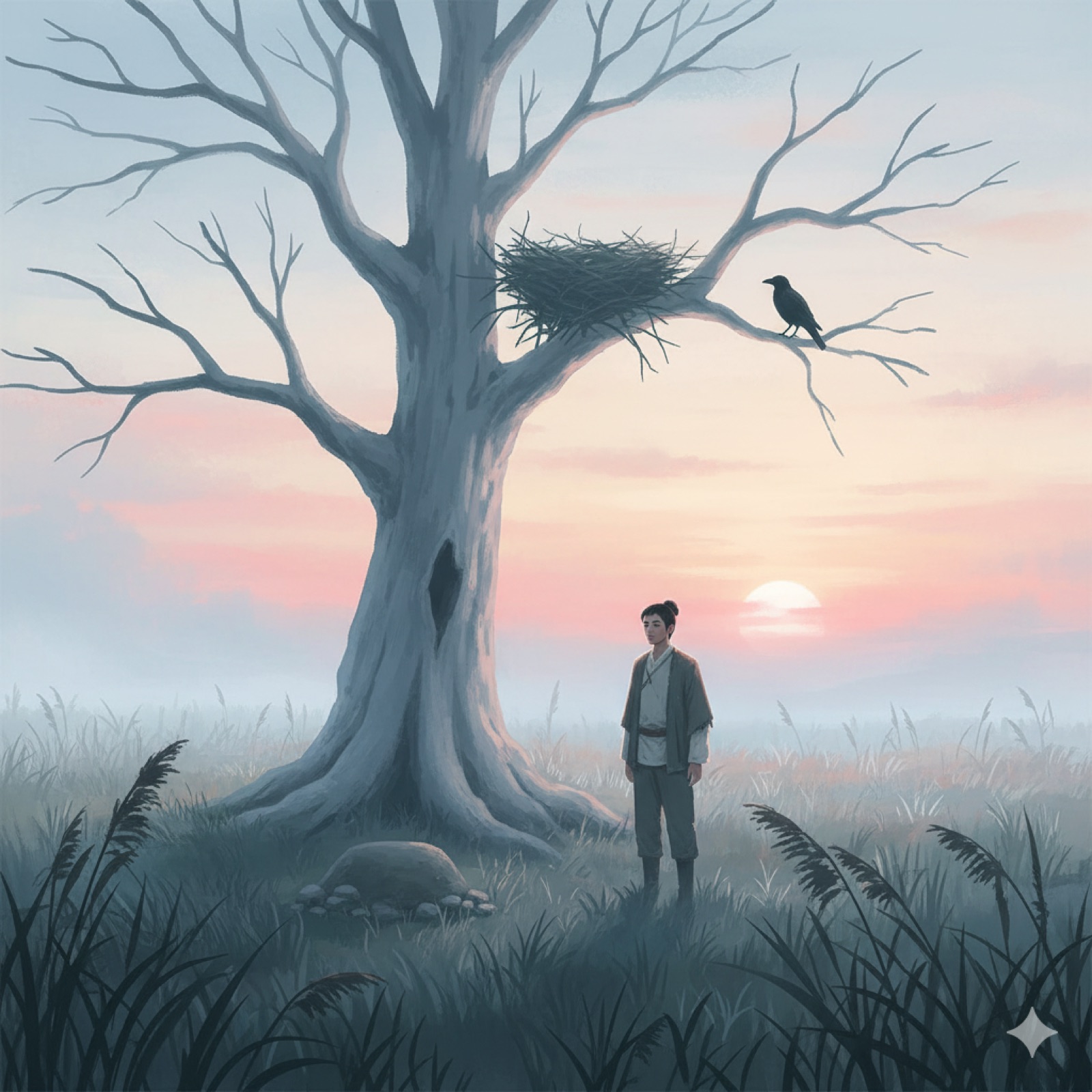
Ning thanked her for the truth and asked when to prepare. “Tomorrow night,” she said. Leaving in tears she pleaded, “I have fallen into the sea of hell with no shore in sight. If you will wrap my rotten bones and return them home for burial, it would equal giving me new life.” Ning agreed without hesitation. She told him to remember the white poplar with a crow’s nest beneath which her grave lay, then vanished.
Chapter IV · Sword Against Night-Rovers
Fearing Yan might go out, Ning invited him to dine early with wine and dishes prepared. He pressed Yan to share his quarters; Yan demurred, claiming eccentric habits, but Ning moved his bedding in regardless. Yan relented yet warned, “I admire your heroism, but heed my words: do not pry into the wrapped object inside my chest. Disobey and we both suffer.” Ning promised compliance.
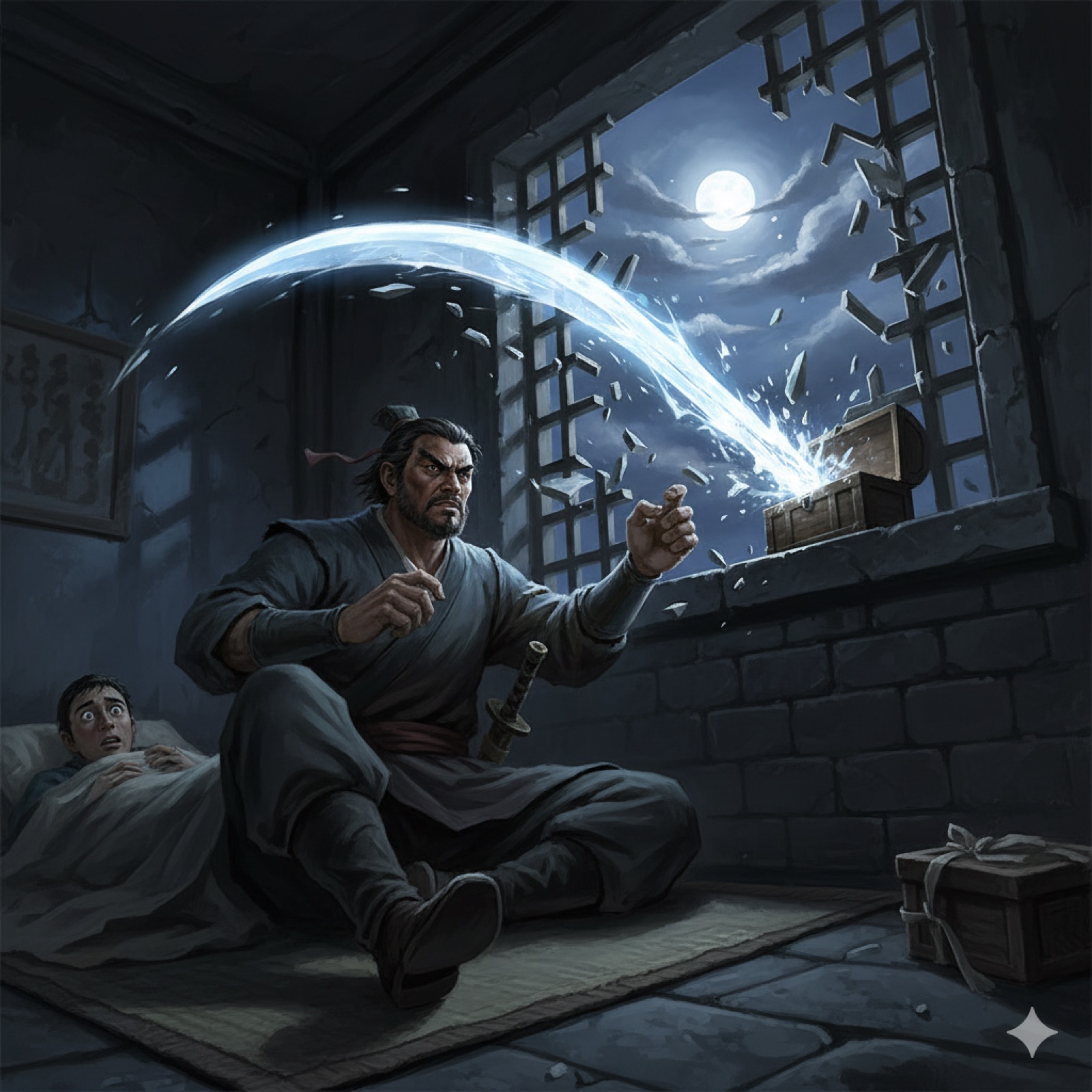
They soon lay down. Yan set a small chest on the windowsill and fell asleep with booming snores, while Ning lay awake. Near the first watch a shadow flitted outside the window. Something peered through the lattice, its eyes flickering. Before Ning could call out, an object burst from the chest—glittering like a strip of white silk—shattering the stone mullions before streaking outside and returning with the speed of lightning.
Yan awoke, lifted the chest, and took out a gleaming item two inches long and as wide as a leek leaf. He sniffed it, muttered about bold ghosts smashing his chest, wrapped it layer upon layer, and replaced it inside. Ning, amazed, confessed what he had seen. Yan smiled, “Since we are friends I will not hide it. I am a swordsman. Had the window not been stone, the demon would already be dead—though it did receive a wound.” The object was his luminous sword.
Chapter V · Bones Returned Home
At daybreak Ning saw blood traces beneath the window. North of the temple he found ranks of deserted graves and, among them, a mound where a white poplar stood crowned with a crow’s nest—just as Xiaoqian had said. Deciding his course, Ning packed to leave.
Yan hosted a farewell banquet and presented Ning with a torn leather sword bag. “Guard this well; it wards off demons,” he said. Ning expressed a desire to learn swordsmanship. Yan replied, “Your integrity suits the path, yet your fate lies amid honor and office, not the sword.” Ning feigned that a younger sister was buried nearby, exhumed Xiaoqian’s remains, wrapped them in cloth, hired a small boat, and returned home.
Near the city he interred the bones beside his own dwelling and offered prayers: “Poor lonely spirit, I bury you by my humble house so your songs and tears reach my ears. May this bowl of broth comfort you, though it is plain.” As he finished, a voice called behind him, “Wait for me!” He turned to see Xiaoqian herself.
Chapter VI · A Daughter in the Household
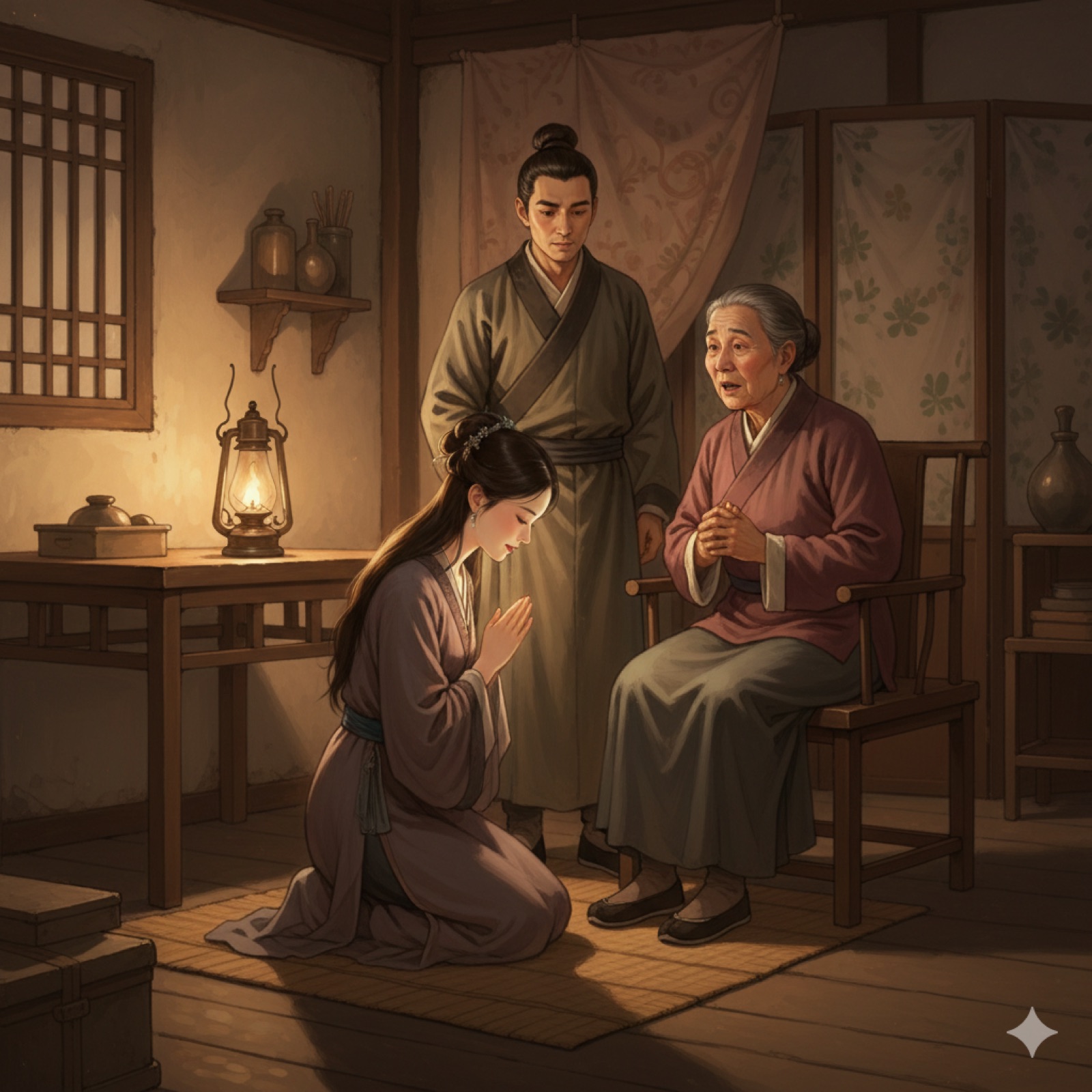
Overjoyed, Xiaoqian thanked him. “You keep faith. For you I would die ten times without regret. Please take me to your parents; even as a maidservant I will not complain.” By daylight she was even more radiant than at night. Ning asked her to wait while he informed his mother. Astonished, his mother cautioned silence lest Ning’s chronically ill wife be frightened.
Xiaoqian entered, knelt, and declared, “Drifting alone without kin, I received the young master’s great kindness and wish to wed him in return.” Mother Ning admired her beauty but replied, “I have only this one son to continue the line. I dare not marry him to a ghost.” Xiaoqian said, “I bear no ill will. If the dead cannot win your trust, let me serve as a younger sister and attend you day and night.” Pitying her sincerity, the mother agreed.
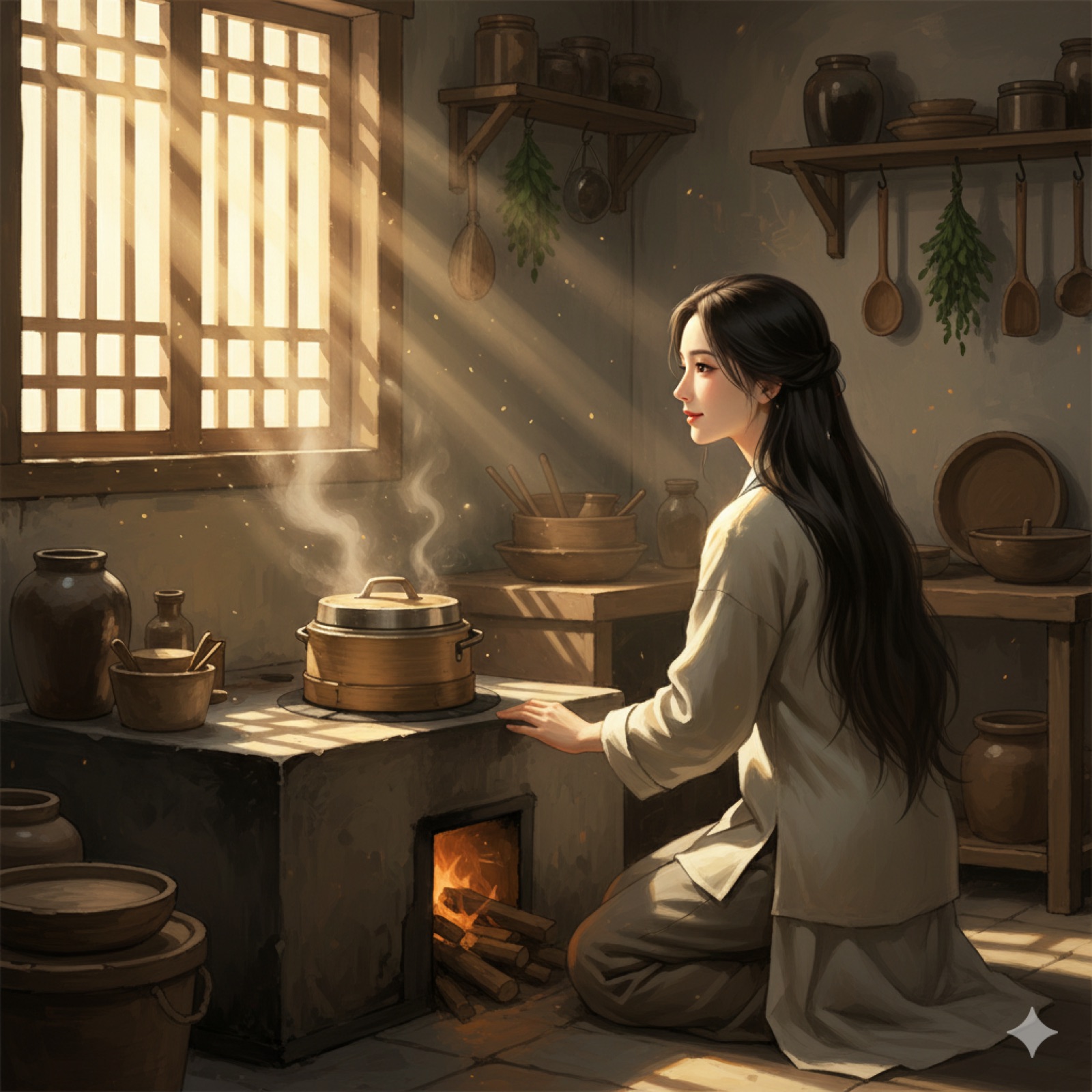
Xiaoqian ran the kitchen, tended chores as if long accustomed, and each morning brought water to wash the elder’s face. At dusk, fearing the mother’s unease, she withdrew to the ancestral study. Yet she hesitated at the door, sensing the sword aura from Yan’s leather bag hung within. Once Ning moved it elsewhere she entered, reading sutras by lamplight. Pitying her fear of the lonely grave, Ning urged her to sleep in another room, but propriety and his mother’s caution kept them apart.
Chapter VII · Demon at the Door
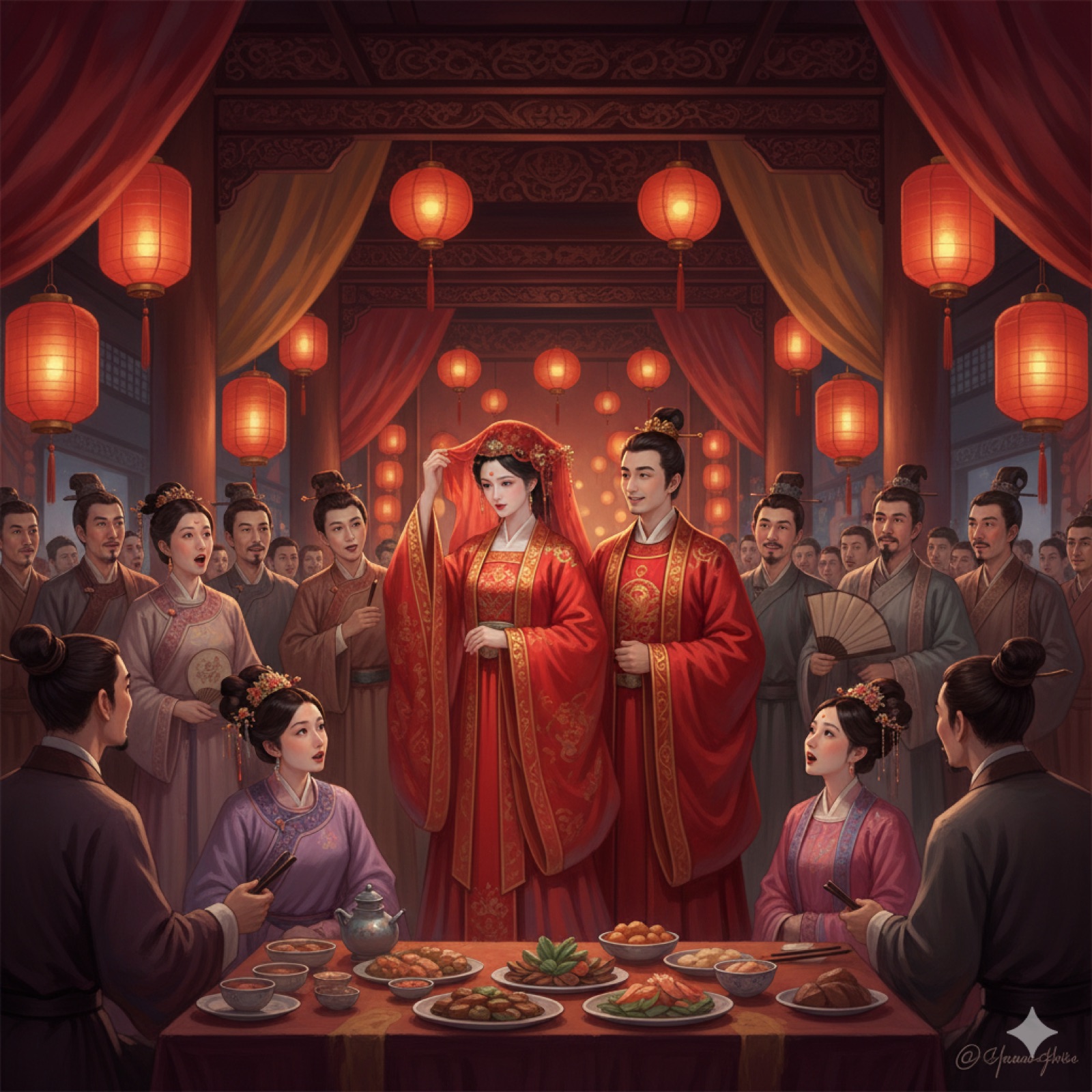
Ning’s wife eventually died. Mother Ning secretly wished to make Xiaoqian her daughter-in-law yet feared it would harm her son. Xiaoqian sensed this and said, “I dwell here to avoid harming travelers. The young master is righteous; even Heaven esteems him. I ask only to rely on him a few years and earn a title to honor my shade.” Assured that his lineage would flourish with three sons, the mother consented, and the wedding was celebrated. Guests marvelled at the bride, thinking her a celestial maiden.
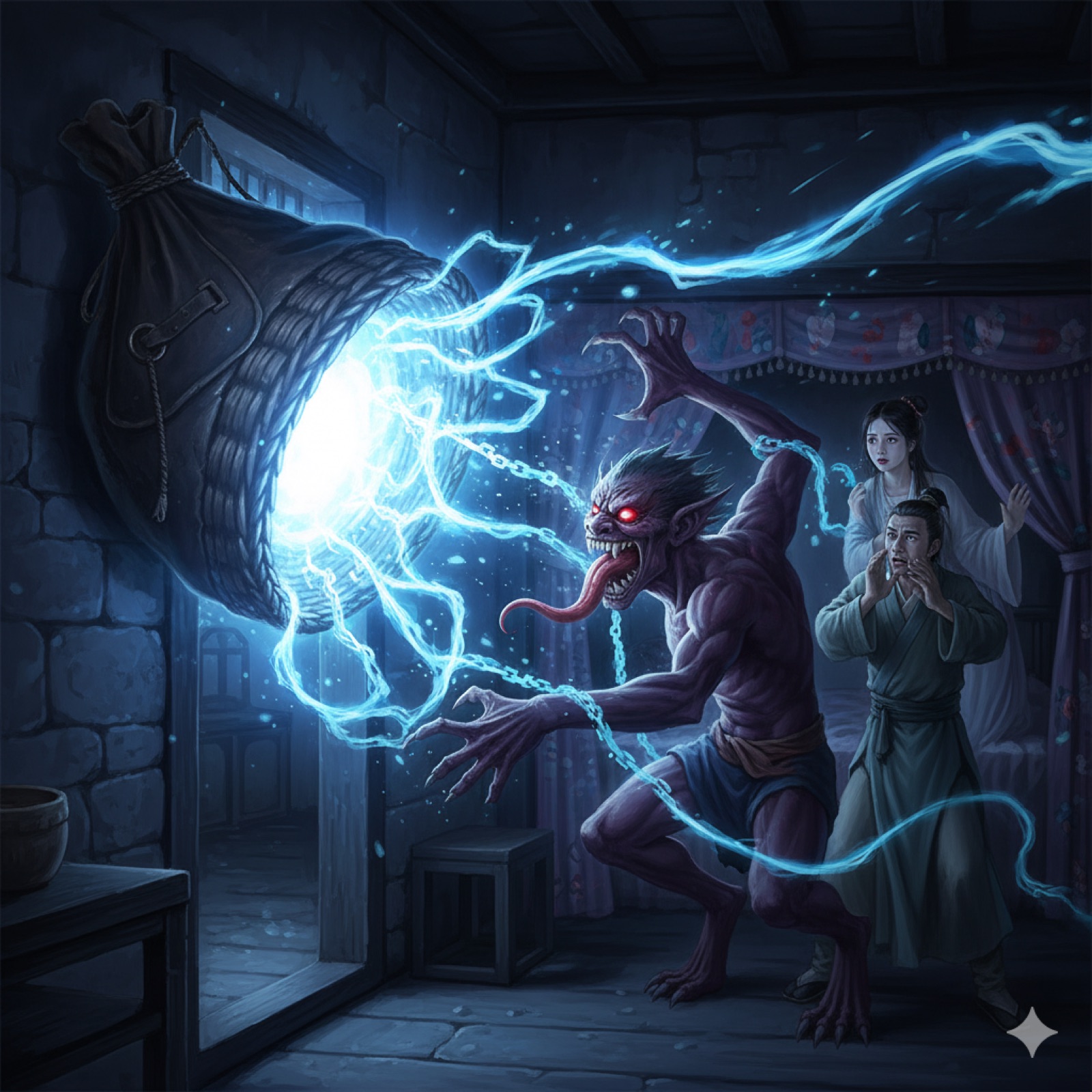
One day Xiaoqian sat worried and asked for Yan’s leather sword bag to be hung above their bed, then upon the doorway. “For days my heart has pounded,” she said. “The Jinhua demon surely hates that I escaped and will seek me out.” That night, as they kept watch by candlelight, a creature like a yaksha swooped down—eyes flashing, tongue blood-red. It paced before the door, finally reaching for the bag as if to tear it. Suddenly the bag boomed, swelling like a great basket. A phantasmal figure lunged forth, seized the yaksha, and dragged it inside. The bag shrank silent, leaving only cool water within.
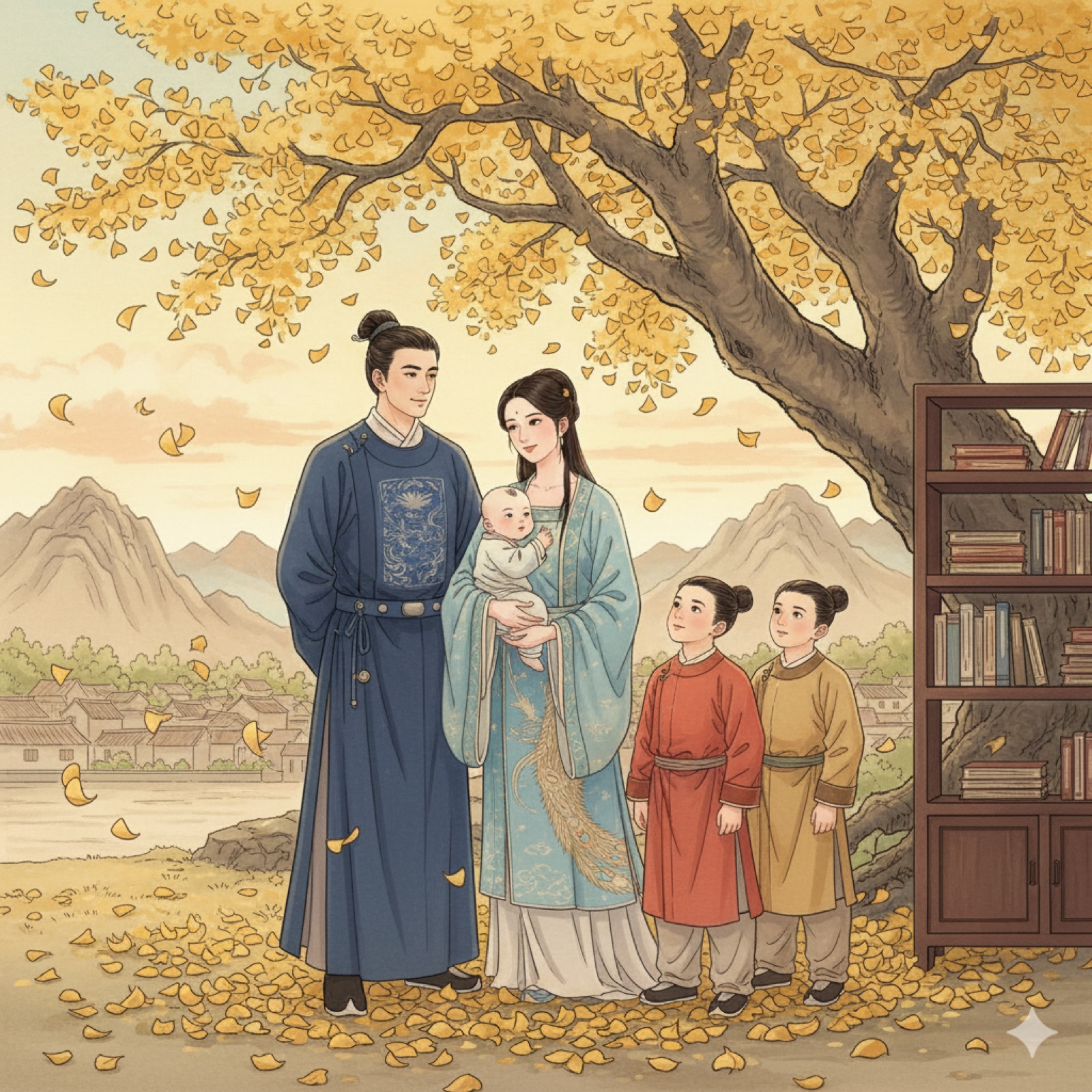
“It is finished,” Xiaoqian rejoiced. From then on they lived in peace. In time Ning Caichen ranked among the successful jinshi. Xiaoqian bore him a son. After Ning took a concubine, both she and Xiaoqian bore sons; all three later held office with fine reputations.